In April 2010, report from the island said that heavy equipment were brought to Lagsingan, a sitio of Poblacion, Rapu-Rapu. Initial information includes the construction of a road from Poblacion to Morocborocan. In response to a letter, the Department of Agriculture disclosed that the project is a farm-to-market earth road 1,800 meters long and budgeted with P5 million. Our fear is that a mere earth road will not last when the rains fall later this year. Where is justice for Rapu-Rapu? After giving an estimated P10 billion to the miners, all that the island gets in return is an earth road!
A reporter of a big TV network went to the island and told this author that there is no development in Rapu-Rapu.
So, where’s the development promised by advocates of mining? I am reminded of the article written by Peter Wallace. On October 27, 2007, Mr. Wallace published his opinions through an article titled “Where’s the pot of gold?”
Mr. Wallace wrote:
Mining has been touted as one of the sectors government will promote as a major contributor to the economy. . . Early this year, mining exports were to be 3 percent of the total exports or about $1-$2 billion. Just recently the Mines and Geosciences Bureau quoted $10 billion as a likely investment figure.
By now investment should be far higher, the big mining companies should be aggressively exploring, joint venturing, buying mines. But, except for a handful, they’re not.
A smart government would ask why, and act to change it. The secretary of the Department of Environment and Natural Resources should be talking to the industry and asking why.
The first to feel sorry for such a dour situation should be the government. It seems an Australian is sorrier and does all the sour-graping. Why? Because foreigners like him have more to gain from the newly bared mining resources of the Philippines than Filipinos ourselves. Like a virgin being undressed before alien eyes, the mountains of our country make the mouth of Mr. Wallace water.
Since Mr. Wallace really thinks so low of us Filipinos I am inclined to return the volley. Australia began to be colonized by England as a place of exile for rapists, murderers, thieves and other species of low life. If he thinks $10 billion is not being availed of by us then he should be happy because such huge amount is still in his countrymen’s hands. One man’s expense is another’s income. The Filipino’s non-income is the foreigner’s savings. We do not feel sorry for that but Mr. Wallace does! Why? Because that $10 billion is a “bait” with which the likes of him would ensnare our people and squeeze out the bounty of our land. No fool would put in one dollar and get 90 cents in return. Mr. Wallace proposes to pour in $ 10 billion because he wants foreigners to receive 20, 30 billion dollars or more. In Rapu-Rapu, for example, Lafayette is reported to invest $40 million. A browsing of the company’s website and a research on metal prices plus some arithmetic would reveal that Lafayette would earn $1.549 billion. That’s earning $38 for every $1 invested! What do the people of Rapu-Rapu get in return? In Mr. Wallace’s word NADA! They got five major fishkills, 68% decline in fish catch, decline in copra production, landslides, black bug infestation brought in by Lafayette ships, total loss of drinking water supply in Barangay Pagcolbon, militarization, poverty, and migration.
Filipinos are not taking the bait and so Mr. Wallace calls our government unsmart and by extension, our people too.
If the current rush into mining concessions is not enough for Mr. Wallace that is his problem. We, Filipinos, do not need an alien like him to tell us what to do. For us, the frenzy over mining explorations is destroying our forests, mountains, rivers and seas. In return, so much destruction of livelihoods has happened. In Rapu-Rapu, for example, five fishkills have been documented. An average of 68% decline in fish catch was reported by Ibon Foundation in a study conducted in February 2007.
We have been dictated to by foreigners since 1565 when Miguel Lopez de Legazpi arrived. We do not need another dictation disguised as unsolicited advice from an alien. That constitutes foreign interference. His advocated foreign investment in an industry originally exclusive to Filipinos is economic interference.
Mr. Wallace wrote:
There, of course, is one reason I can immediately cite: Continuity. You don’t change managers every few months if you wish to instill a sense of stability in a system. . . It’s crazy. It introduces a level of uncertainty that if you’re investing hundreds of millions of dollars, you will surely pause to think. Every manager (in this case Secretary) has his own philosophies, own set of priorities, own agenda. And a change can be quite substantial, particularly in a country where the leader herself has changed policy emphases fairly frequently.
If Mr. Wallace meets a problem he will not solve it. He will find someone or something to blame. In this instant case, he blames the government. If there is any wrong which our government has done it is not doing nothing. Rather, it is doing so much for foreign companies. One regional director even sounds like the spokesperson of Lafayette. Our government provides tax deductions and holidays to the countrymen of Mr. Wallace. I pay 23% of my annual income as tax. I work for 12 months, I give back two months income as tax. With 13th month pay, I have the equivalent of 11 months of earnings to use for my needs. Since there is a 12% EVAT approximately another month’s income is taken away as tax. That leaves me with only 10 months out of the equivalent of 13 months of work.
What tax is paid by mining companies? Under the PEZA privileges, they pay only 7% plus the measly real estate taxes. However, they are given by the Special Economic Zone Act, a tax-free period of six to eight years. Originally, Lafayette said its mine life was six years. Later the company adjusted it to eight years. Those estimates are not results of a technical study. They are results of a taxation study. Other corporations are taxed at the rate of 32% of their income.
Mr. Wallace wrote:
On top of that, the government has done a poor job at protecting the industry from attack. The incident at the Lafayette mine in Rapu Rapu was allowed to get completely out of hand. Oppositors, including Bishop Bastes, had a field day— and the government stood by. It even, quite unbelievably, encouraged it by appointing this bishop to head an investigation. He, of course, recommended closing the mine.
Well, he almost succeeded, and the government’s dilly-dallying over giving approval to re-open the mine almost broke the company. This was a minor incident. It should have been resolved within 3-6 months. Lafayette had made the corrections by then, but it was 12 costly months later before approval to re-open was given.
As to countering the rabid vilification by oppositors and giving a true picture of what happened, the government did nothing. Just stood by.
The Arroyo government has been overly protective of foreign interests while laying bare to alien rape the patrimony of its citizens. In the Rapu-Rapu case, Lafayette failed the “tutorial” run. The leaks and other failures are documented in the Technical Working Group Report. Instead of honoring his word, “You fail it, I close it!”, Mr. Angelo Reyes permitted the company to resume operations.
One nasty practice of opinion-makers is the use of exaggeration as in claiming that Bishop Bastes “had a field day – and the government stood by.” If I read the TWG Report on the “tutorial” run correctly and saw the ceremonies in Malacañang with clear eyes, the government was severely biased against the RRFFC and favored the minority report of Mr. Gregorio Tabuena. It was Mr. Tabuena who recommended a “test” run which was not in the recommendations of the commission. Of all the commission’s recommendations, none was heeded. If that was not protecting the foreign investor, then what is?
The government stood idly by. That’s true. It did nothing to protect Filipino interest. Yes, the recommendation was to close the mine. Just a minor correction: that recommendation did not come from Bishop Bastes. It came from the majority. The Tabuena recommendation for a test run was heeded by the government. In spite of so many concessions to Lafayette, Mr. Wallace still has the gall to whine about a government that “stood idly by”. He even has the chronology confused. The government did not stand idly by then appointed Bishop Bastes. Instead, the government appointed Bishop Bastes, ignored the recommendations of the Commission, heeded that of Mr. Tabuena, then showered Lafayette with so many favors. After all that, Mr. Wallace still feels so much inadequacy.
The “rabid vilification” was committed not by Lafayette oppositors but by Lafayette apologists and the company’s own Community Relations Department. Consider the following:
Atty. Bayani Agabin threatened to sue those spreading the “hoax that was the October 2007 fishkill”. Glaring evidences in the form of reports and photographs abounded but to Atty. Agabin the fifth fishkill was a “hoax”.
At least two members of the Albay Sangguniang Panlalawigan staunchly defended Lafayette against the accusations.
The true picture of what happened was distorted by Lafayette itself when its managers denied in public their culpability for the October 2005 fishkills but admitted it in their private communications to the DENR.
The truth about Lafayette operations was suppressed when the Philippine Daily Inquirer removed from its February 17, 2007 issue the body of the story titled “Environmentalists from 27 nations sign petition for investors in Rapu-Rapu mine to pull out. We searched every page of the issue but the story was nowhere.
If we remember correctly, it was the RRFFC specially Bishop Bastes who was severely vilified.
Mr. Wallace wrote:
When I come across media’s virulent attacks on mining, on top of the tirades of some members of the Church and well-funded NGOs, I wonder why mining companies even bother at all. Why not just leave the Philippines to be a backwater with its people in poverty? I’m not aware of any action any of these groups are doing that would give a job and a decent life to Filipinos. I’m not even aware of any positive action many of these groups are taking to improve the environment.
We also wonder why despite the strong and loud protests against mining companies they still remain in the country. Makapal ang mukha is our word for it. We also wonder why a guest of the Philippines is allowed to stay here longer than a day after insulting us with: Why not just leave the Philippines to be a backwater with its people in poverty? We had prosperity in the 1800s from the abaca industry. Our economy was second only to Japan’s in the 1960’s. It never boomed because of mining. Masbate and Camarines Norte have been mined since the Spanish times but they remain among the poorest ten provinces to this day. Take these statistics:
Aroroy, Masbate has been a mining town since 1837 (http://www.geocities.com/ppsec/pp/masbate.htm) yet it is only a 2nd Class municipality (http://en.wikipedia.org/wiki/Aroroy,_Masbate). Masbate is the poorest province of Bicol with a poverty incidence level of 62.8% according to the NSCB survey in 2000 (http://txtmania.com/trivia/national.php).
Paracale, Camarines Norte has been a mining town since 1939 (http://www.wallstreetreporter.com/linked/PearlAsianMiningIndustries.html) and yet it is only a 3rd Class municipality (http://en.wikipedia.org/wiki/Paracale,_Camarines_Norte). Camarines Norte is the second poorest province of Bicol, with a poverty incidence level of 52.7% according to the NSCB survey in 2000 (http://txtmania.com/trivia/national.php).
Rapu-Rapu, Albay has been mined since the 1930’s but it is only a 4th Class municipality (http://en.wikipedia.org/wiki/Rapu-Rapu,_Albay ), the poorest in the province.
Both Masbate and Camarines Norte are listed as among the country’s ten (10) poorest provinces per NSCB survey in 2000 (http://txtmania.com/trivia/national.php).
On the other hand, the country’s richest provinces and congressional districts derive their wealth not from mining but other industries:
In its 2000 survey, the National Statistical Coordination Board (NSCB) identified the ten provinces with the lowest poverty incidence levels. Each of the four districts in Metro Manila, composed of several cities and/or municipalities, was treated as a province in the survey.
1. 2nd district of Metro Manila1 4.1 percent (a)
2. 4th district of Metro Manila2 4.9 percent (b)
3. Bulacan, 5.4 percent
4. 1st district of Metro Manila (Manila), 5.8 percent (c)
5. Batanes, 7.5 percent
6. Rizal, 8 percent
7. Laguna, 8.6 percent
8. 3rd district of Metro Manila3, 9 percent
9. Bataan, 9.9 percent
10. Cavite, 10.2 percent.
(a) Mandaluyong, Marikina, Pasig, Quezon City and San Juan
(b) Las Pinas, Makati, Muntinlupa, Paranaque, Pasay, Pateros and Taguig
(c) Caloocan, Valenzuela, Malabon and Navotas
(Source: http://www.txtmania.com/trivia/national.php)
If those are not enough, consider these:
-----------------------Share in non-fuel minerals --------Population
-----------------------in Value of total Exports -------below Poverty line
Country -----------------(percent)-----------------------(percent)
Guinea-----------------------17----------------------------- 40
Niger-------------------------67----------------------------- 63
Zambia-----------------------66----------------------------- 86
Jamaica----------------------53----------------------------- 34
Chile--------------------------43----------------------------- 21
Peru---------------------------40----------------------------- 49
Congo------------------ ------40----------------------------- 49
Mauritania-------------------40----------------------------- n.a.
Papua New Guinea----------35------------------------------ 57
Togo--------------------------30------------------------------ 32
(Source: UNCTAD Handbook of World Mineral Trade Statistics; World Bank Development Indicators; UN Development Programme: Human Development Report 2001, quoted in the lecture of Dr. Giovanni Tapang of the University of the Philippines College of Engineering on January 31, 2006 at the Daragang Magayon Hall of Aquinas University of Legazpi).
The data show that these countries’ exports are composed of high percentages of non-fuel minerals and yet the percentages of their populations below poverty line are also very high. In his testimony before the commission on April 6, Hon. Alvarez stated that the mining communities of the Cordilleras, Canada, and Australia “have become miserable patches of poverty after the gold or the mineral ore was extracted.” So, what poverty alleviation can arise from mining?
These statements are downright arrogant: “I’m not aware of any action any of these groups are doing that would give a job and a decent life to Filipinos. I’m not even aware of any positive action many of these groups are taking to improve the environment.”
It is the problem of Mr. Wallace if he is unaware of certain things. Everyone has the privilege to choose ignorance. But arrogance is entirely different. He is unaware of the effect of Lafayette mining on the fish catch of fishermen in Rapu-Rapu – a decline of 68% according to an Ibon Foundation study in February 2007. Of the 286 jobs in the mine, only 131 are for the residents of Rapu-Rapu. The company promised 1000 during start up and 416 during normal operation in a Powerpoint presentation in 2001. The anti-mining NGOs are the ones protecting the livelihood of people. All that mining companies can give to ordinary people are menial jobs while their executives sitting in airconditioned offices earn millions. Mr. Wallace only has to read the annual reports of Lafayette to verify this. Not only are mining companies depriving people of their livelihood. The companies are also destroying the resources that should have been protected for the use of future generations as sustainable development requires.
Mr. Wallace also wrote:
If I were a mining company I’d like the government to tell me what it has done, and will do to fully protect my investment and my people. I’m not going to invest in a place where both are at risk. I’d have called all the mining company representatives that are here for an extended dialogue (meaning, two-way talks) about these issues: What are the concerns? What will be done about them?
Specific actions and corresponding deadlines committed to. I’ve offered to arrange it, but thus far I’ve had no response from government.
Since I am a taxpayer (while mining companies are given so much tax breaks) I’d like the government to tell me what it has done, and will do to fully protect my tax and my people. I’m not going to continue supporting an administration that places both at risk. I call on it to scrap the Philippine Mining Act of 1995. After 15 years, where is the development? What have mining companies like Lafayette done to our national patrimony?
Why demand response from our government? Mr. Wallace is not a citizen. He is better deported back to Australia for insulting us and advocating interests inimical to the Filipino people.
Mr. Wallace's article was downloaded from
http://www.manilastandardtoday.com/?page=peterWallace_oct26_2007 October 27, 2007
1

2

3

The Final Verdict


RRPP Income from 2005 to 2012

RRPP Income in 2012


AND NOW THE END IS NEAR . . .

2

3

4

5

6

7

8

9

10

11

12

13

18

25

26

27

28

30

33

35

38

40

45

46

47

48

49

51

55

56

57

58

59

60 Finale


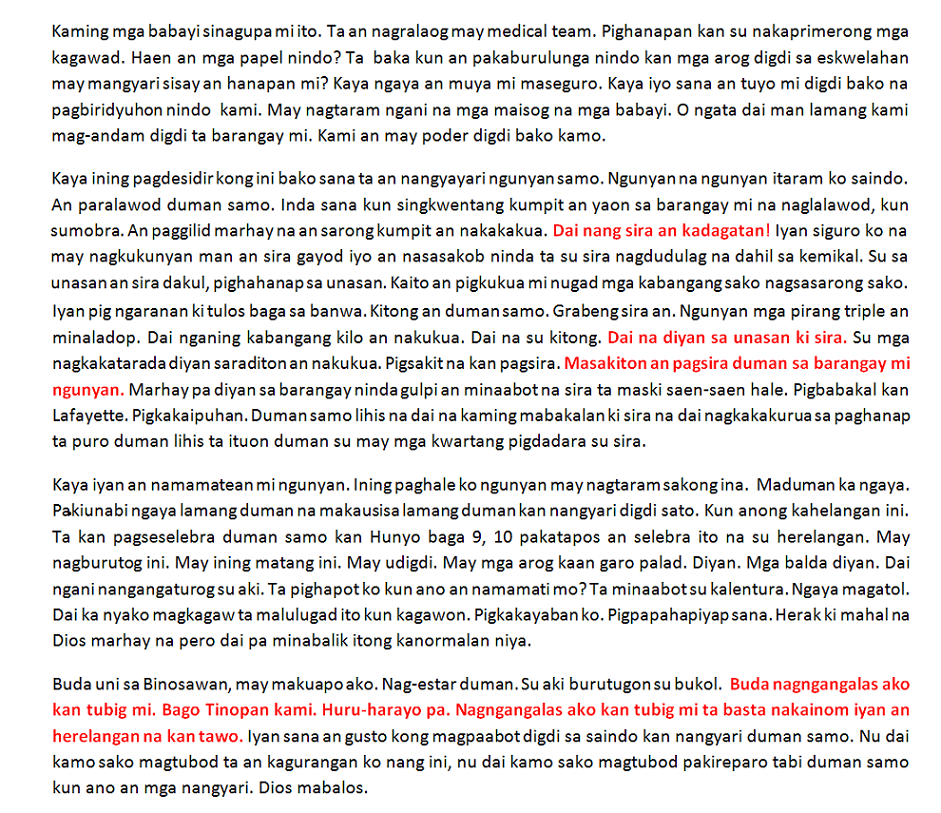


RRPP Income and Taxes in 2011


RRPP Income and Taxes in 2010


Giving some; taking so much

01

02

03

04

05

06

07

08

09

10

11

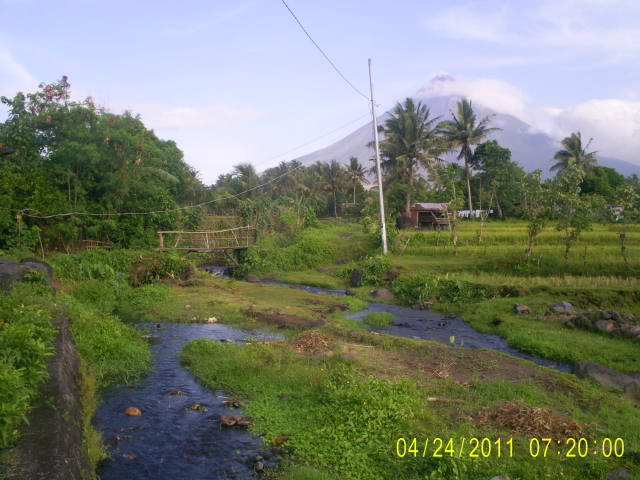


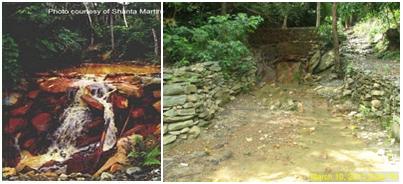
Pagcolbon gabion

Pagcolbon downstream gabion
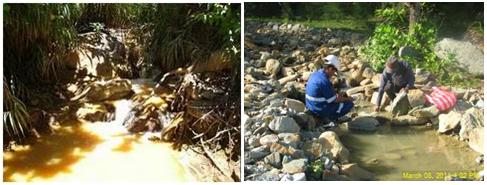
Pagcolbon downstream

Pagcolbon downstream looking towards the sea

Pagcolbon shoreline

Pagcolbon downstream

Pagcolbon shoreline

Hollowstone downstream

Hollowstone shoreline


Maypajo shoreline


Friday, May 21, 2010

Saturday, May 1, 2010
Would You Plant Your Feet in Mid-air?
(A response to Peter Wallace’s "Would You Invest Here?")
George Bernard Shaw once said about liberals as people who “have their feet solidly planted in mid-air.” We have nothing against liberals, neither anything in favor of conservatives nor something about those in the grey area between. Also, we do not know if the Australian columnist Peter Wallace is a liberal, conservative or anywhere in the grey area between. Of one thing, however, we are certain: as to the reality of life for the millions of toiling masses of Filipinos, Mr. Wallace is way up in his Cloud 9. We do not blame him. He is an alien from Down Under where life is more pleasant. The Philippines is poor because we citizen Filipinos have no control over and do not benefit from our own natural resources. Those resources have been given over to foreigners by Filipino authorities who are junior partners of the former. The toiling masses get meager wages, the junior partners get much but the foreign investor reaps the lion’s share. In Rapu-Rapu, for example, based on figures from Lafayette itself, the gain is $37.5 for every $1 invested. If the Philippines is in such a mess, most of the cause is foreign domination which, today, masquerades as foreign investment which Mr. Wallace taunts us to accept hook, line and sinker much like the spider that welcomed its victims to the parlor:
Come hither, hither, pretty Fly, with the pearl and silver wing;
Your robes are green and purple — there’s a crest upon your head;
Your eyes are like the diamond bright, but mine are dull as lead!”
Alas, alas! how very soon this silly little Fly,
Hearing his wily, flattering words, came slowly flitting by;
With buzzing wings she hung aloft, then near and nearer drew,
Thinking only of her brilliant eyes, and green and purple hue –
Thinking only of her crested head — poor foolish thing! At last,
Up jumped the cunning Spider, and fiercely held her fast.
He dragged her up his winding stair, into his dismal den,
Within his little parlour — but she ne’er came out again!
And now dear little children, who may this story read,
To idle, silly flattering words, I pray you ne’er give heed:
Unto an evil counsellor, close heart and ear and eye,
And take a lesson from this tale, of the Spider and the Fly.
Again, take the case of the residents of Rapu-Rapu. Mr. Wallace once wrote, “where’s the pot of gold?” (Manila Standard Today October 26, 2007) We ask, in Rapu-Rapu where’s the development? When our NGO volunteers went there in August 2009, they saw a woman making hard brooms out of coconut midribs. Each sells for P15 (about 35 US cents). She makes four in a day. Yet, the coconuts are threatened by destruction as the mining operation of the former Lafayette Mining Limited of Australia through its local subsidiary, Lafayette Philippines, Inc. (now named Korea Malaysia Philippines Resources, Inc) expands from the southern tip to the north of the island.
Mr. Wallace is in the Philippines to convince Filipinos that Australian investment is good. We do know it is good! But good for whom? Certainly for them; we have doubts if it is, for Filipinos. The Rapu-Rapu trauma from Lafayette Mining Limited of Australia may not be the representative case of their engagement here but it definitely opens our minds to the very real phenomenon of good intentions paving the road to hell.
On March 5, 2010 Mr. Wallace wrote in the Manila Standard Today:
A mine (Lafayette) was closed for a mining spill that did no measurable damage. A delay of over 6 months to approve reopening forced the company into bankruptcy. Bishop Arturo Bastes lied to encourage that closure, which the government acquiesced to.
Mr. Wallace strayed too far from the facts of that unhappy incident (unhappy, for us here in the locality) as the following rebuttals would prove:
The mining spills of 2005 did a lot of damage. – Lafayette violated the Clean Water Act of the Philippines. It was slapped with a total of P16 million in fines. Mr. Wallace can go over the records of the Pollution Adjudication Board. If the fines were undeserved, then Mr. Wallace can initiate a refund proceeding.
The people of Rapu-Rapu and surrounding towns suffered immensely from income loss because the fish in Albay Gulf were poisoned with cyanide measured at 35 parts per million (the tolerable limit is 0.05 ppm). (Source: Mines and Geosciences Bureau “Fact sheet on the Mercury Issue in Albay” dated February 2, 2006 Page 9) While the executives of Lafayette continued to earn their millions in salaries, the fishermen of Albay and Sorsogon lost their meager incomes. The pre-operation survey of Lafayette revealed that the fishermen in the primary impact barangays of Malobago, Pagcolbon and Binosawan were earning P19.8 million a year. (Source: Lafayette Powerpoint presentation titled Baseline Data slide 12). The company did not reveal any economic impact study after the mining operation started. However, Ibon Foundation learned, through a study in February 2007, that the average weekly income of fishermen in five barangays (Poblacion, Malobago, Binosawan, Tinopan in Rapu-Rapu and Billante in Prioto Diaz) dropped by 68.56%. (Ibon Foundation; Mining Rapu-Rapu’s Pot of Gold, a Study on the Socioeconomic Impacts of the Rapu-Rapu Polymetallic Project on the Residents of Rapu-Rapu, Albay and Prieto Diaz, Sorsogon). These are the hard facts on the ground. So, where’s the development? Would you invest in mining here and still raise your nose high in civilized society?
Mr. Wallace should have been there when the women, children and some men from Rapu-Rapu Island stormed the session of the Albay Provincial Board on December 12, 2007. Ms. Shanta Martin, then with Oxfam Australia, was there to witness for all Australians. Those people dared to storm a government function because they have been suffering from immeasurable damage. Does Mr. Wallace still insist on his “no measurable damage”? Perhaps, he is right - because “no measurable damage” also translates to immeasurable damage!
November 2005 to July 2006 was not a period of total closure. – During that period, Rapu-Rapu Processing, Inc. was ordered to stop but, Lafayette’s other arm, the Rapu-Rapu Minerals, Inc. continued to blast the open pit and quarry for gold, silver, copper and zinc. The dust continued to settle on the surrounding villages and the shaking of the ground was felt as far as the town center. Instead of totally closing the mine, erstwhile DENR Secretary Angelo Reyes ordered a “test run” following the advice of one member of the Rapu-Rapu Fact-finding Commission, Mr. Gregorio Tabuena. What took place were one “test run” after another until the mine had a semblance of compliance with the Clean Water Act of the Philippines. True enough, the runs were not tests but “tutorials.” A test is administered by a teacher on a student who works independently. In the case of Lafayette, the Technical Working Group was behind the company tutoring it on what to do when there were failures (the TWG Report shows that on July 20-21, 2006 there was a fishkill; the graphs of the readings of heavy metal content of samples were “way above the charts.”)
Lafayette was not bankrupt. It could afford to pay Mr. Roderick Watt $ 365,867 or the equivalent of P18,293,350 (at exchange rates prevailing in 2006 and 2007) despite the October spills. Mr. David Baker earned $ 1,197,884 or P 55,433,075. (Source: LML Annual Reports for 2006 and 2007) Lafayette is like the man who went to a feast and later complained that he starved!
Some impudence.- Mr. Wallace has the temerity to write: Bishop Arturo Bastes lied to encourage that closure, which the government acquiesced to. If Mr. Wallace wrote a similar charge against a Muslim imam, he would have deserved a fatwah call for death. But we are Catholics and we are reminded of the first of the Seven Last Words of Christ: Forgive them for they know not what they do (Luke 23:34).
It is bad enough that an Australian meddles in Philippine affairs. It is worse that a foreigner insults a Filipino. It is worst that a foreign meddler fallaciously writes in the press of a predominantly Catholic country that a bishop lied!
Bishop Arturo Bastes, SVD of the Diocese of Sorsogon told the truth that the Commission, formed with presidential approval, recommended the closure of the Rapu-Rapu mine. The government did not acquiesce to the recommendation. On the contrary, Sec. Reyes allowed Lafayette to undergo “tutorial” runs; the company failed the “tutorials” as the TWG Report proves; and yet Lafayette was permitted in the end to continue normal operations. That is the bare truth! Wallace is the one lying!
How would he know the truth about Rapu-Rapu? He was never here. He did not see the mother of three children who almost died after eating poisoned fish from the seashore. He does not feel the earth shaken when RRMI blasts the open pit. He does not traverse hills and creeks on foot for seven hours just to sell farm produce in the town center. He cannot see the brown, yellow and orange colors of creeks emanating from the minesite and disgorging their waters into Albay Gulf. He is way up there in Could 9, his feet solidly planted in mid-air.
To prove how absurd the position of this Wallace is, the reader is invited to read his article titled “Corruption is endemic – but must it be?” published in the Manila Standard Today on April 9, 2010. After devoting ten paragraphs to the corruption of the Berlusconi government in Italy, Mr. Wallace writes: Don’t you find yourself transcribing “Philippines” into each of the paragraphs above?
What is the point of mentioning this? The point is that Mr. Wallace himself is convinced that the Philippines is wracked with corruption. If he knows the Philippines that much then he also knows how deep corruption has crept into the implementation of environmental laws, the Mining Act of 1995 included. For example, he should know that Lafayette’s lawyer offered P5 million to the local officials of Rapu-Rapu to get the latter’s assent to the reopening of the mine. Lafayette itself drafted the resolution supposed to be passed by the municipal council calling for the resumption of mine operation. There is the National Bureau of Investigation Legazpi District Office Report which concluded that there was no contamination in and around the mine site yet it says the sampling was done on April 4, 2006 then submitted to the NBI Forensic Chemistry Division in Manila on March 28, 2006 – one week before the date of sample gathering! Asked through two letters how this discrepancy in dates happened, the NBI Legazpi District Office never gave a formal reply, just a verbal word that we did not deserve a copy of the report because we were not the ones who commissioned the NBI investigation. I had a chance to divulge this discrepancy in a conference of pollution control officers on May 9, 2007 in Casablanca Hotel in Legazpi City in the presence of Engr. Jason Magdaong of Lafayette. The engineer replied that his company had nothing to do with the NBI Legazpi report!
A lot more skeletons in the closet await anyone who would care to read about the Lafayette misadventure in Rapu-Rapu. I have written a book about it. It is due for launching soon.
George Bernard Shaw once said about liberals as people who “have their feet solidly planted in mid-air.” We have nothing against liberals, neither anything in favor of conservatives nor something about those in the grey area between. Also, we do not know if the Australian columnist Peter Wallace is a liberal, conservative or anywhere in the grey area between. Of one thing, however, we are certain: as to the reality of life for the millions of toiling masses of Filipinos, Mr. Wallace is way up in his Cloud 9. We do not blame him. He is an alien from Down Under where life is more pleasant. The Philippines is poor because we citizen Filipinos have no control over and do not benefit from our own natural resources. Those resources have been given over to foreigners by Filipino authorities who are junior partners of the former. The toiling masses get meager wages, the junior partners get much but the foreign investor reaps the lion’s share. In Rapu-Rapu, for example, based on figures from Lafayette itself, the gain is $37.5 for every $1 invested. If the Philippines is in such a mess, most of the cause is foreign domination which, today, masquerades as foreign investment which Mr. Wallace taunts us to accept hook, line and sinker much like the spider that welcomed its victims to the parlor:
Come hither, hither, pretty Fly, with the pearl and silver wing;
Your robes are green and purple — there’s a crest upon your head;
Your eyes are like the diamond bright, but mine are dull as lead!”
Alas, alas! how very soon this silly little Fly,
Hearing his wily, flattering words, came slowly flitting by;
With buzzing wings she hung aloft, then near and nearer drew,
Thinking only of her brilliant eyes, and green and purple hue –
Thinking only of her crested head — poor foolish thing! At last,
Up jumped the cunning Spider, and fiercely held her fast.
He dragged her up his winding stair, into his dismal den,
Within his little parlour — but she ne’er came out again!
And now dear little children, who may this story read,
To idle, silly flattering words, I pray you ne’er give heed:
Unto an evil counsellor, close heart and ear and eye,
And take a lesson from this tale, of the Spider and the Fly.
Again, take the case of the residents of Rapu-Rapu. Mr. Wallace once wrote, “where’s the pot of gold?” (Manila Standard Today October 26, 2007) We ask, in Rapu-Rapu where’s the development? When our NGO volunteers went there in August 2009, they saw a woman making hard brooms out of coconut midribs. Each sells for P15 (about 35 US cents). She makes four in a day. Yet, the coconuts are threatened by destruction as the mining operation of the former Lafayette Mining Limited of Australia through its local subsidiary, Lafayette Philippines, Inc. (now named Korea Malaysia Philippines Resources, Inc) expands from the southern tip to the north of the island.
Mr. Wallace is in the Philippines to convince Filipinos that Australian investment is good. We do know it is good! But good for whom? Certainly for them; we have doubts if it is, for Filipinos. The Rapu-Rapu trauma from Lafayette Mining Limited of Australia may not be the representative case of their engagement here but it definitely opens our minds to the very real phenomenon of good intentions paving the road to hell.
On March 5, 2010 Mr. Wallace wrote in the Manila Standard Today:
A mine (Lafayette) was closed for a mining spill that did no measurable damage. A delay of over 6 months to approve reopening forced the company into bankruptcy. Bishop Arturo Bastes lied to encourage that closure, which the government acquiesced to.
Mr. Wallace strayed too far from the facts of that unhappy incident (unhappy, for us here in the locality) as the following rebuttals would prove:
The mining spills of 2005 did a lot of damage. – Lafayette violated the Clean Water Act of the Philippines. It was slapped with a total of P16 million in fines. Mr. Wallace can go over the records of the Pollution Adjudication Board. If the fines were undeserved, then Mr. Wallace can initiate a refund proceeding.
The people of Rapu-Rapu and surrounding towns suffered immensely from income loss because the fish in Albay Gulf were poisoned with cyanide measured at 35 parts per million (the tolerable limit is 0.05 ppm). (Source: Mines and Geosciences Bureau “Fact sheet on the Mercury Issue in Albay” dated February 2, 2006 Page 9) While the executives of Lafayette continued to earn their millions in salaries, the fishermen of Albay and Sorsogon lost their meager incomes. The pre-operation survey of Lafayette revealed that the fishermen in the primary impact barangays of Malobago, Pagcolbon and Binosawan were earning P19.8 million a year. (Source: Lafayette Powerpoint presentation titled Baseline Data slide 12). The company did not reveal any economic impact study after the mining operation started. However, Ibon Foundation learned, through a study in February 2007, that the average weekly income of fishermen in five barangays (Poblacion, Malobago, Binosawan, Tinopan in Rapu-Rapu and Billante in Prioto Diaz) dropped by 68.56%. (Ibon Foundation; Mining Rapu-Rapu’s Pot of Gold, a Study on the Socioeconomic Impacts of the Rapu-Rapu Polymetallic Project on the Residents of Rapu-Rapu, Albay and Prieto Diaz, Sorsogon). These are the hard facts on the ground. So, where’s the development? Would you invest in mining here and still raise your nose high in civilized society?
Mr. Wallace should have been there when the women, children and some men from Rapu-Rapu Island stormed the session of the Albay Provincial Board on December 12, 2007. Ms. Shanta Martin, then with Oxfam Australia, was there to witness for all Australians. Those people dared to storm a government function because they have been suffering from immeasurable damage. Does Mr. Wallace still insist on his “no measurable damage”? Perhaps, he is right - because “no measurable damage” also translates to immeasurable damage!
November 2005 to July 2006 was not a period of total closure. – During that period, Rapu-Rapu Processing, Inc. was ordered to stop but, Lafayette’s other arm, the Rapu-Rapu Minerals, Inc. continued to blast the open pit and quarry for gold, silver, copper and zinc. The dust continued to settle on the surrounding villages and the shaking of the ground was felt as far as the town center. Instead of totally closing the mine, erstwhile DENR Secretary Angelo Reyes ordered a “test run” following the advice of one member of the Rapu-Rapu Fact-finding Commission, Mr. Gregorio Tabuena. What took place were one “test run” after another until the mine had a semblance of compliance with the Clean Water Act of the Philippines. True enough, the runs were not tests but “tutorials.” A test is administered by a teacher on a student who works independently. In the case of Lafayette, the Technical Working Group was behind the company tutoring it on what to do when there were failures (the TWG Report shows that on July 20-21, 2006 there was a fishkill; the graphs of the readings of heavy metal content of samples were “way above the charts.”)
Lafayette was not bankrupt. It could afford to pay Mr. Roderick Watt $ 365,867 or the equivalent of P18,293,350 (at exchange rates prevailing in 2006 and 2007) despite the October spills. Mr. David Baker earned $ 1,197,884 or P 55,433,075. (Source: LML Annual Reports for 2006 and 2007) Lafayette is like the man who went to a feast and later complained that he starved!
Some impudence.- Mr. Wallace has the temerity to write: Bishop Arturo Bastes lied to encourage that closure, which the government acquiesced to. If Mr. Wallace wrote a similar charge against a Muslim imam, he would have deserved a fatwah call for death. But we are Catholics and we are reminded of the first of the Seven Last Words of Christ: Forgive them for they know not what they do (Luke 23:34).
It is bad enough that an Australian meddles in Philippine affairs. It is worse that a foreigner insults a Filipino. It is worst that a foreign meddler fallaciously writes in the press of a predominantly Catholic country that a bishop lied!
Bishop Arturo Bastes, SVD of the Diocese of Sorsogon told the truth that the Commission, formed with presidential approval, recommended the closure of the Rapu-Rapu mine. The government did not acquiesce to the recommendation. On the contrary, Sec. Reyes allowed Lafayette to undergo “tutorial” runs; the company failed the “tutorials” as the TWG Report proves; and yet Lafayette was permitted in the end to continue normal operations. That is the bare truth! Wallace is the one lying!
How would he know the truth about Rapu-Rapu? He was never here. He did not see the mother of three children who almost died after eating poisoned fish from the seashore. He does not feel the earth shaken when RRMI blasts the open pit. He does not traverse hills and creeks on foot for seven hours just to sell farm produce in the town center. He cannot see the brown, yellow and orange colors of creeks emanating from the minesite and disgorging their waters into Albay Gulf. He is way up there in Could 9, his feet solidly planted in mid-air.
To prove how absurd the position of this Wallace is, the reader is invited to read his article titled “Corruption is endemic – but must it be?” published in the Manila Standard Today on April 9, 2010. After devoting ten paragraphs to the corruption of the Berlusconi government in Italy, Mr. Wallace writes: Don’t you find yourself transcribing “Philippines” into each of the paragraphs above?
What is the point of mentioning this? The point is that Mr. Wallace himself is convinced that the Philippines is wracked with corruption. If he knows the Philippines that much then he also knows how deep corruption has crept into the implementation of environmental laws, the Mining Act of 1995 included. For example, he should know that Lafayette’s lawyer offered P5 million to the local officials of Rapu-Rapu to get the latter’s assent to the reopening of the mine. Lafayette itself drafted the resolution supposed to be passed by the municipal council calling for the resumption of mine operation. There is the National Bureau of Investigation Legazpi District Office Report which concluded that there was no contamination in and around the mine site yet it says the sampling was done on April 4, 2006 then submitted to the NBI Forensic Chemistry Division in Manila on March 28, 2006 – one week before the date of sample gathering! Asked through two letters how this discrepancy in dates happened, the NBI Legazpi District Office never gave a formal reply, just a verbal word that we did not deserve a copy of the report because we were not the ones who commissioned the NBI investigation. I had a chance to divulge this discrepancy in a conference of pollution control officers on May 9, 2007 in Casablanca Hotel in Legazpi City in the presence of Engr. Jason Magdaong of Lafayette. The engineer replied that his company had nothing to do with the NBI Legazpi report!
A lot more skeletons in the closet await anyone who would care to read about the Lafayette misadventure in Rapu-Rapu. I have written a book about it. It is due for launching soon.
Saturday, March 13, 2010
Two thousand years needed to restore forest damaged by open pit mining
All along we have thought it would take 30-50 years to revegetate Rapu-Rapu after Lafayette is done mining. National Geographic just published a report that in a mountain top mining for coal in Boone County, West Virginia, it would take 2000 years. Note that they are coal mining in the area, where the process does not entail use of chemicals. In gold, silver, copper and zinc mining, cyanide and sulfuric acid are used. Hence, the process is much more contaminating and a longer period than 2000 years can be expected for Rapu-Rapu. Please read this: http://news.nationalgeographic.com/news/2010/03/100311-mountaintop-mining-west-virginia/
Friday, March 12, 2010
Visit to Rapu-Rapu by New Albay Bishop Confirms Grave Impact of Mining
The following news item was broadcast over Radio Veritas Legazpi (DWBS) during its 7 AM news on March 11, 2010
Baretang Simbahan
Ginibo ni Bishop Joel Baylon kan Diocese kan Legazpi an saiyang kaenot-enoting pastoral visit sa Parokya kan Rapu-Rapu. Sa saiyang pagbisita an Obispo nakipag-ulay sa mga parokyano tanganing kumustahon an kondisyon kan buhay kan kada pamilya. Sa pakikipag-ulay kan Obispo sa mga taga-Rapu-Rapu, Albay napag-araman an sobrang epekto kan padagos na pagmimina sa saindang kabuhayan, salud, asin magin sa kapalibutan. Binisita man ni Bishop Bong Baylon an mga barangay na nasa luwas kan sentro kan banwaan na Rapu-Rapu na suboot plano pang minahon kan Rapu-Rapu Minerals, Inc. Iyan an Baretang Simbahan.
Translation:
Baretang Simbahan
Ginibo ni Bishop Joel Baylon kan Diocese kan Legazpi an saiyang kaenot-enoting pastoral visit sa Parokya kan Rapu-Rapu. Sa saiyang pagbisita an Obispo nakipag-ulay sa mga parokyano tanganing kumustahon an kondisyon kan buhay kan kada pamilya. Sa pakikipag-ulay kan Obispo sa mga taga-Rapu-Rapu, Albay napag-araman an sobrang epekto kan padagos na pagmimina sa saindang kabuhayan, salud, asin magin sa kapalibutan. Binisita man ni Bishop Bong Baylon an mga barangay na nasa luwas kan sentro kan banwaan na Rapu-Rapu na suboot plano pang minahon kan Rapu-Rapu Minerals, Inc. Iyan an Baretang Simbahan.
Translation:
Church News
Bishop Joel Baylon of the Diocese of Legazpi made his very first pastoral visit to the Parish of Rapu-Rapu. During his visit, the Bishop talked to the parishioners to know the situation of every family. In his dialogue with the people of Rapu-Rapu, Albay the Bishop was informed about the grave effects of the ongoing mining operation on their livelihood, health and even the environment. Bishop Bong Baylon also visited the villages outside the capital of the town of Rapu-Rapu which, according to reports, Rapu-Rapu Minerals, Inc. plans to mine. That is the Church News.Saturday, February 20, 2010
A Fishy Tale or Can the Fish Tell?
Tuesday night I had fish for dinner. It was a species we call locally as "kwaw." The flesh measured 4 inches long and 3 inches wide. I noted that it had eggs in its belly. The fish was, therefore, pregnant. It was, therefore, mature. It was, therefore, in its biggest possible size. It would not grow any bigger. I stopped eating and took my camera. What's the big deal? In years past, "kwaw" used to grow very big before becoming pregnant. Its flesh would grow 8 inches long and 5 inches wide. Since 2005, the year Lafayette started full operation, fishermen have observed that the "kwaw" has been stunted in its growth. They attribute the diminution to contamination of the waters around Rapu-Rapu. I do not expect Lafayette to argue that the "kwaw" is having "teenage pregnancy." Another observation is that the supply of "kwaw" lasts for only 2-3 weeks nowadays. In the past, it could be bought in the marketplaces several weeks before and after Holy Week. It would start in March and end in May. This year, the stunted "kwaw" appeared as early as February. In other words, its biological season has been altered.
Those who have eyes must see the truth. Those who have brains need only little effort to realize what is happening around Rapu-Rapu. If certain persons with authority to reverse the down slide would instead pretend not to see empirical data, then that is the problem. That is, indeed, the fishy situation.
Those who have eyes must see the truth. Those who have brains need only little effort to realize what is happening around Rapu-Rapu. If certain persons with authority to reverse the down slide would instead pretend not to see empirical data, then that is the problem. That is, indeed, the fishy situation.
Monday, February 15, 2010
Let us not forget the threat of Coal Mining in Rapu-Rapu
Here's a job offer found at http://www.jobsdb.com/PH/EN/Job.asp?R=JDBP140753199. Rock Energy International Corporation is engaged in coal mining in Liguan, Rapu-Rapu, and is looking for mining engineers, offering "good compensation packages and fringe benefits".
Now, the DENR is complaining that while they are perennially on the hot seat in Rapu-Rapu, the DOE which handles coal mining operations could very well afford to be silent on the issue. The DENR has a point to some extent. Still, you could not overly use -- and expect to get away with it -- the lame excuse that you are just following orders from above.
DOE, it's about time you tell the public the the extent of the coal mining operations in Batan and Rapu-Rapu, and your involvement in them.
.......
Rock Energy International Corporation
Our Company is engaged in coal trading operations and we are looking for highly competitive professionals to be part of the team.
Mining Engineer
Requirements
* Candidate must possess at least a Bachelor's/College Degree in Mining Engineering.
* Preferably with professional license.
* Must be computer literate; knowledge with autocad application is an advantage.
* Preferred languages: Filipino, English
* At least 1 year work experience in the field of mining.
* Preferably 2 years experience specializing in Geology/Geophysics.
* Fresh graduates are welcome to apply.
* Applicants should be Filipino citizens.
* Applicant must be willing to work in Liguan, Rapu-rapu, Albay
* Full-Time position available.
“GOOD COMPENSATION PACKAGE AND OTHER FRINGE BENEFITS AWAITS FOR THOSE WHO WILL QUALIFY”
If you wish to apply for the above position, you may send your resume in word format at recruitment@velcoasia.com or apply in person at G/F Mary Bachrach Bldg. 25th Corner Railroad St. Port Area, Manila
Telephone: 5277070 Fax: 5277373
Interested applicants may also apply in our office at Brgy. Liguan Rapu-rapu, Albay.
Look for Ms. Jenny Roa.
Interested applicants may apply online by clicking on the quick apply button
Now, the DENR is complaining that while they are perennially on the hot seat in Rapu-Rapu, the DOE which handles coal mining operations could very well afford to be silent on the issue. The DENR has a point to some extent. Still, you could not overly use -- and expect to get away with it -- the lame excuse that you are just following orders from above.
DOE, it's about time you tell the public the the extent of the coal mining operations in Batan and Rapu-Rapu, and your involvement in them.
.......
Rock Energy International Corporation
Our Company is engaged in coal trading operations and we are looking for highly competitive professionals to be part of the team.
Mining Engineer
Requirements
* Candidate must possess at least a Bachelor's/College Degree in Mining Engineering.
* Preferably with professional license.
* Must be computer literate; knowledge with autocad application is an advantage.
* Preferred languages: Filipino, English
* At least 1 year work experience in the field of mining.
* Preferably 2 years experience specializing in Geology/Geophysics.
* Fresh graduates are welcome to apply.
* Applicants should be Filipino citizens.
* Applicant must be willing to work in Liguan, Rapu-rapu, Albay
* Full-Time position available.
“GOOD COMPENSATION PACKAGE AND OTHER FRINGE BENEFITS AWAITS FOR THOSE WHO WILL QUALIFY”
If you wish to apply for the above position, you may send your resume in word format at recruitment@velcoasia.com or apply in person at G/F Mary Bachrach Bldg. 25th Corner Railroad St. Port Area, Manila
Telephone: 5277070 Fax: 5277373
Interested applicants may also apply in our office at Brgy. Liguan Rapu-rapu, Albay.
Look for Ms. Jenny Roa.
Interested applicants may apply online by clicking on the quick apply button
MGB Bicol bares accomplishments for 2009
Patting themselves on the back for a job well done... putting mining over the environment
MGB Bicol may harp its checklist accomplishments but it could never shake off its image as Lafayette/RRMI handlers. Consider what they have done to Rapu-Rapu:
1. The MGB turned the much publicized 2006 test run (Angelo Reyes: "You fail it, I close it".) into a tutorial run, going out of the way to make sure the mining firm pass the so-called test.
2. The company "failed" in many respects during the much publicized 2006 test run. The volume of polluting mineral contents in bodies of water surrounding the mine was found to be off the charts. A fish kill happened in July 2007, in the middle of the test run. Yet MGB declared the company to have passed the test on the strength of a highly questionable "expert" opinion. An opinion that was roundly & soundly criticized by the expert's former mentor.
3. What Multipartite Monitoring Team is MGB talking about in Rapu-Rapu when credible stakeholders shun membership in the much-distrusted MMT?
4. We still could not forget how the MGB whitewashed the investigation as to the cause of the 2007 fish kill in Rapu-Rapu, how they suppressed evidence, how they would not explain their findings to the public. We never heard about the final repot of the investigation after their anomalous initial report that was made public via the Albay Provincial Board.
5. MGB's main task in Rapu-Rapu is to help ensure the continued operations of the mine. It trumpets its accomplishments at the expense of the environment.
6. Most likely MGB will include its endorsing RRMI's mining exploration of Poblacion and Morocborocan among their accomplishment for 2010. Can't you see it? It is already Poblacion we are talking about, the center of the island, where practically everybody resists the mine and where pro-mining politicians don't win in the elections.
We simply cannot buy your "we are just doing our job" line. There ought to be more to your being public servants than simply signing papers following a checklist.
MGB RO V, if you disagree with our conclusions, we would love to hear your side. But please do not use the perennial lame excuse: "We are just following orders from above."
.......
MGB Bicol bares accomplishments for 2009
Legazpi City (11 February) -- The Mines and Geosciences Bureau (MGB) in Bicol has disclosed Monday (February 8) its major accomplishments for calendar year 2009 ensuring safety, health and environmental commitments of mining industry and measures to mitigate the implication of geologic hazards.
Engr. Reynulfo Juan, MGB Bicol regional director, told PIA News service that the agency has successful organized a total of 15 Capacity-Building Seminars of Geologic Hazard Awareness and Disaster Preparedness in the municipalities of Bulan, Sta. Magdalena, Matnog, Prieto Diaz and Castilla in Sorsogon; Pili, Ocampo and Tigaon in Camarines Sur; and Rapu-Rapu, Sto. Domingo, Bacacay, Malilipot, Tiwi, Tabaco City and Malinao in Albay.
During said seminars, local disaster manager and residents as well were briefed on the concept of geologic hazards, occurrence, areas prone to these hazards, reading and interpreting geo-hazard maps.
Juan said that the stakeholders were given information on how they could make use of the maps for preparedness planning, how to prepare and what to do during the occurrence of geologic hazards like flood and landslide.
MGB Bicol also distributed posters and flyers on flood and landslides hazards, geo-hazard maps with corresponding risk reduction, preparedness and mitigation measures
The bureau also turned over DVDs containing motion pictures on Living with Geologic Hazards and Community Based Flood Early Warning System.
A total of 408 barangays and 1,213 participants benefited from the capacity building seminar.
The bureau spearheaded Geo-hazard Identification Surveys to at least five subdivision/land development projects in Albay, Camarines Norte and Camarines Sur.
The bureau also had detailed investigation of areas threatened by landslides and other geologic hazards in Casiguran, Magallanes and Bacon in Sorsogon and in Bato, Catanduanes.
On mining, MGB Bicol regularly monitored the safety, health and environmental commitments of three active large-scale mines in the region, namely Ibalong Resources and Development Corporation, Rapu-Rapu Minerals Incorporated and Filminera Resources Corporation.
It investigated and resolved a total of 12 complaints, cases and conflicts involving illegal treasure hunting in Mt. Isarog National Park and Pacol in Naga City, all in Camarines Sur; seizure of MV Tina by the Esperanza (Masbate) Municipal Bantay Dagat Task Force suspected to be loaded with sand materials; alleged illegal magnetite sand extraction in the municipalities of Bulusan, Magallanes and Gubat including the reported extraction in Matnog, all in Sorsogon; against mining operation of Uni-Dragon Mining Corporation in Camarines Norte; alleged illegal small-scale mining within the watershed area in Jose Panganiban, Camarines Norte; alleged mining activities in Libmanan, Camarines Sur; alleged siltation caused by Konka-Fulim Mining and Development Corporation in Paracale, Camarines Norte; and alleged extraction of Ara-al (dimension stones) in Sangay, Albay.
At least 25 mining rights or permits holders, including Rapu-Rapu Minerals Incorporated, Trans-Asia, Masbate Phils. Incorporated, Filminera Resources Corporation, Johnson Gold Mining Corporation, United Paragon Mining Corporation, Uni-Dragon, OroPhil and Nena Pimentel were validated to ensure compliance to policies of activities undertaken within the area of their operation.
The bureau also monitored the compliance to safety, health, environment and social programs during exploration, development and operation stage of Ibalong Resources and Development Corporation in Camalig, Albay; Rapu-Rapu Minerals Incorporated in Rapu-Rapu, Albay; UBS Marketing Corporation in Legazpi City and Filminera Resources Corporation in Masbate.
Lastly, MGB Bicol implemented measures to strengthen the Multi-Partite Monitoring Teams (MMTs) for Ibalong Resources and Development Corporation (IRDC) in Palanog, Camalig, Albay; Rapu-Rapu Polymetallic Project in Rapu-Rapu, Albay and Filminera Resources Corporation in Masbate to monitor these mining companies' environmental and social commitments. (MGB V/PIA)
MGB Bicol may harp its checklist accomplishments but it could never shake off its image as Lafayette/RRMI handlers. Consider what they have done to Rapu-Rapu:
1. The MGB turned the much publicized 2006 test run (Angelo Reyes: "You fail it, I close it".) into a tutorial run, going out of the way to make sure the mining firm pass the so-called test.
2. The company "failed" in many respects during the much publicized 2006 test run. The volume of polluting mineral contents in bodies of water surrounding the mine was found to be off the charts. A fish kill happened in July 2007, in the middle of the test run. Yet MGB declared the company to have passed the test on the strength of a highly questionable "expert" opinion. An opinion that was roundly & soundly criticized by the expert's former mentor.
3. What Multipartite Monitoring Team is MGB talking about in Rapu-Rapu when credible stakeholders shun membership in the much-distrusted MMT?
4. We still could not forget how the MGB whitewashed the investigation as to the cause of the 2007 fish kill in Rapu-Rapu, how they suppressed evidence, how they would not explain their findings to the public. We never heard about the final repot of the investigation after their anomalous initial report that was made public via the Albay Provincial Board.
5. MGB's main task in Rapu-Rapu is to help ensure the continued operations of the mine. It trumpets its accomplishments at the expense of the environment.
6. Most likely MGB will include its endorsing RRMI's mining exploration of Poblacion and Morocborocan among their accomplishment for 2010. Can't you see it? It is already Poblacion we are talking about, the center of the island, where practically everybody resists the mine and where pro-mining politicians don't win in the elections.
We simply cannot buy your "we are just doing our job" line. There ought to be more to your being public servants than simply signing papers following a checklist.
MGB RO V, if you disagree with our conclusions, we would love to hear your side. But please do not use the perennial lame excuse: "We are just following orders from above."
.......
MGB Bicol bares accomplishments for 2009
Legazpi City (11 February) -- The Mines and Geosciences Bureau (MGB) in Bicol has disclosed Monday (February 8) its major accomplishments for calendar year 2009 ensuring safety, health and environmental commitments of mining industry and measures to mitigate the implication of geologic hazards.
Engr. Reynulfo Juan, MGB Bicol regional director, told PIA News service that the agency has successful organized a total of 15 Capacity-Building Seminars of Geologic Hazard Awareness and Disaster Preparedness in the municipalities of Bulan, Sta. Magdalena, Matnog, Prieto Diaz and Castilla in Sorsogon; Pili, Ocampo and Tigaon in Camarines Sur; and Rapu-Rapu, Sto. Domingo, Bacacay, Malilipot, Tiwi, Tabaco City and Malinao in Albay.
During said seminars, local disaster manager and residents as well were briefed on the concept of geologic hazards, occurrence, areas prone to these hazards, reading and interpreting geo-hazard maps.
Juan said that the stakeholders were given information on how they could make use of the maps for preparedness planning, how to prepare and what to do during the occurrence of geologic hazards like flood and landslide.
MGB Bicol also distributed posters and flyers on flood and landslides hazards, geo-hazard maps with corresponding risk reduction, preparedness and mitigation measures
The bureau also turned over DVDs containing motion pictures on Living with Geologic Hazards and Community Based Flood Early Warning System.
A total of 408 barangays and 1,213 participants benefited from the capacity building seminar.
The bureau spearheaded Geo-hazard Identification Surveys to at least five subdivision/land development projects in Albay, Camarines Norte and Camarines Sur.
The bureau also had detailed investigation of areas threatened by landslides and other geologic hazards in Casiguran, Magallanes and Bacon in Sorsogon and in Bato, Catanduanes.
On mining, MGB Bicol regularly monitored the safety, health and environmental commitments of three active large-scale mines in the region, namely Ibalong Resources and Development Corporation, Rapu-Rapu Minerals Incorporated and Filminera Resources Corporation.
It investigated and resolved a total of 12 complaints, cases and conflicts involving illegal treasure hunting in Mt. Isarog National Park and Pacol in Naga City, all in Camarines Sur; seizure of MV Tina by the Esperanza (Masbate) Municipal Bantay Dagat Task Force suspected to be loaded with sand materials; alleged illegal magnetite sand extraction in the municipalities of Bulusan, Magallanes and Gubat including the reported extraction in Matnog, all in Sorsogon; against mining operation of Uni-Dragon Mining Corporation in Camarines Norte; alleged illegal small-scale mining within the watershed area in Jose Panganiban, Camarines Norte; alleged mining activities in Libmanan, Camarines Sur; alleged siltation caused by Konka-Fulim Mining and Development Corporation in Paracale, Camarines Norte; and alleged extraction of Ara-al (dimension stones) in Sangay, Albay.
At least 25 mining rights or permits holders, including Rapu-Rapu Minerals Incorporated, Trans-Asia, Masbate Phils. Incorporated, Filminera Resources Corporation, Johnson Gold Mining Corporation, United Paragon Mining Corporation, Uni-Dragon, OroPhil and Nena Pimentel were validated to ensure compliance to policies of activities undertaken within the area of their operation.
The bureau also monitored the compliance to safety, health, environment and social programs during exploration, development and operation stage of Ibalong Resources and Development Corporation in Camalig, Albay; Rapu-Rapu Minerals Incorporated in Rapu-Rapu, Albay; UBS Marketing Corporation in Legazpi City and Filminera Resources Corporation in Masbate.
Lastly, MGB Bicol implemented measures to strengthen the Multi-Partite Monitoring Teams (MMTs) for Ibalong Resources and Development Corporation (IRDC) in Palanog, Camalig, Albay; Rapu-Rapu Polymetallic Project in Rapu-Rapu, Albay and Filminera Resources Corporation in Masbate to monitor these mining companies' environmental and social commitments. (MGB V/PIA)
Thursday, February 11, 2010
Social Action Center - Diocese of Legazpi statement opposing RRMI application for expansion ot its mining exploration
Mr. Joselin Marcus Fragada
Regional Executive Director
Department of Environment and Natural Resources
Region V, Regional Center Site, DENR V
Rawis, Legazpi City
STATEMENT OF SUPPORT TO THE OPPOSITION OF THE APPLICATION FOR EXPANSION OF THE MINING EXPLORATION
We strongly support the sentiments of the community in voicing their opposition against the application for expansion of mining exploration in the barangays of Poblacion and Morocborocan in the municipality of Rapu-Rapu, Albay. As experienced in the past, there were already violations committed by the Company and yet, were not given enough sanctions to merit such violations.
And now, application for such is being submitted to your good office weighing the benefits it has provided to the community as well as the destruction and deprivation it has incurred in the community, it has been found wanting.
The government’s drive to mitigate climate change in the province among its guidelines is contained in its Ten Commandments on Climate Change, expressed in the seventh commandment which says, “No to open pit mining”. Mining operations in Rapu-Rapu contradicts this very commandment and continuing to allow its operation makes us voiceless and toothless in order to punish this violators.
The general experience of the mining industry in the Philippines has never benefited areas from the mining operations. In fact, it has contributed to the worsening of economic and environmental condition. Allowing the further expansion of the mining exploration will only contribute to the ill effects of mining operations in the whole country.
We, the Social Action Center-Diocese of Legazpi would want to express our strong opposition against the said application of Rapu-Rapu Minerals, Inc.
Let us hear the voices of the little ones who are the greatest victims of this operation rather than protect the wealthy and the powerful who amassed the wealth of the poor.
(signed)
Rev. Fr. Ramoncito S. Segubiense
Executive Director
4 February 2010
Social Action Center-Diocese of Legazpi
Cathedral Compound, Albay District, Legazpi City
Regional Executive Director
Department of Environment and Natural Resources
Region V, Regional Center Site, DENR V
Rawis, Legazpi City
STATEMENT OF SUPPORT TO THE OPPOSITION OF THE APPLICATION FOR EXPANSION OF THE MINING EXPLORATION
We strongly support the sentiments of the community in voicing their opposition against the application for expansion of mining exploration in the barangays of Poblacion and Morocborocan in the municipality of Rapu-Rapu, Albay. As experienced in the past, there were already violations committed by the Company and yet, were not given enough sanctions to merit such violations.
And now, application for such is being submitted to your good office weighing the benefits it has provided to the community as well as the destruction and deprivation it has incurred in the community, it has been found wanting.
The government’s drive to mitigate climate change in the province among its guidelines is contained in its Ten Commandments on Climate Change, expressed in the seventh commandment which says, “No to open pit mining”. Mining operations in Rapu-Rapu contradicts this very commandment and continuing to allow its operation makes us voiceless and toothless in order to punish this violators.
The general experience of the mining industry in the Philippines has never benefited areas from the mining operations. In fact, it has contributed to the worsening of economic and environmental condition. Allowing the further expansion of the mining exploration will only contribute to the ill effects of mining operations in the whole country.
We, the Social Action Center-Diocese of Legazpi would want to express our strong opposition against the said application of Rapu-Rapu Minerals, Inc.
Let us hear the voices of the little ones who are the greatest victims of this operation rather than protect the wealthy and the powerful who amassed the wealth of the poor.
(signed)
Rev. Fr. Ramoncito S. Segubiense
Executive Director
4 February 2010
Social Action Center-Diocese of Legazpi
Cathedral Compound, Albay District, Legazpi City
Resolution of Lagsingan Tribal Council in Rapu-Rapu condemning the MGB endorsement of the RRMI application for mining exploration in 2 barangays
LAGSINGAN TRIBAL COMMUNITY
National Commission for Indigenous Peoples Registered
Sitio Lagsingan, Barangay Poblacion, Rapu-Rapu, Albay
Hale sa minutos kan biglaan na ginibong hororon kan Lagsingan Tribal Council kan petsa 11 kan Enero alas 4:00 an hapon sa Sitio Lagsingan, Poblacion, Rapu-Rapu, Albay.
Resolusyon kan Lagsingan Tribal Council
Blg. 001, Serye 2010
RESOLUSYON SA PAGKONDENAR ASIN PAGKONTRA SA BAKO MAKATAWONG PAG-ENDORSAR KAN MINES AND GEOSCIENCES BUREAU SA PAAGI NI REGIONAL DIRECTOR REYNULFO A. JUAN SA OPISINA KAN RAPU-RAPU, ALBAY KAN NAKAAGING PETSA 5 KAN PEBRERO 2010 MANONGOD DAA SA NOTICE OF APPLICATION KAN KUMPANYANG RAPU-RAPU MINERALS INC. (RRMI) EXPA 000080-V PARA SA EXPLORATION PERMIT SA BARANGAY POBLACION BUDA BARANGAY MOROCBOROCAN TANGANING MINAHON AN KABUBULDAN NA SAKOP KAN MGA NASABING BARANGAY
Proponent: Lagsingan Tribal Community
NA, an mga nasabing barangay igwa ki nakaistar na nagtitios na mga tawo asin tribu na an ikinabubuhay hale sa dagat asin kabubuldan, buda an tubig na samong pig-iinom hale sa kabubuldan na samong pig-iistaran. An mga sapa o salog na pinagbubulusan kan tubig na samong piggagamit sa oroaldaw siguradong makukuntaminar asin mapuputol an bulos kaini kun deretsong minahon an samong kabubuldan;
NA, kun maidadagos an pagmina digdi sa Barangay Poblacion siguradong aagihan an comunidad (nin) samong tribu na magkakawsa nin mga minasunod:
1. takot sa oras na sinda nagkukundukta nin pagbobomba sa kabubuldan;
2. pagkaraot kan kabubuldan na sa pag-abot kan tag-uran siguradong rarasayan an samong kaharongan;
3. dae na kami ki makukua na kabuhayan sa kabubuldan ta sainda nang dinistrungkar;
4. makukuntaminar an dagat na saro kan samong pigkukuwaan nin pagkabuhay dahil sa mga chemical na saindang piggagamit na mabulos sa sapa o salog na mabulos deretso sa kadagatan;
5. kahelangan dahil sa pagkakuntaminar kan tubig asin kadagatan na magkakawsa nin kagadanan.
NGONIAN KUN SIRING, an Conseho kan Tribung Taboy kaiba an (mga) miembro dae nanggad minauyon asin higot na minakontra asin minakundenar sa application kan RRMI na minahon an Barangay Poblacion buda Barangay Morocborocan.
Samong isinasagibo ini tanganing makaabot sa mga nanunundan an samuyang higot na pagkontra asin pagkundenar sa gabos na klase nin pagmimina digdi sa samuyang lugar.
Ginibo ini ngonyan na petsa 23 kan Enero digdi sa Rapu-Rapu, Albay.
Senertipikaran ko an nasambit sa itaas na totoo asin tama.
(signed)
JOSEPH ECLEO
Vice-Chieftain
(signed)
RONY B. BERNALDEZ
Tribal Secretary
(signed)
ALFREDO B. ECLEO
Treasurer
(signed)
MIGUEL P. DERRAMAS
Kagawad
(signed)
ALFREDO DE LA CRUZ
Kagawad
(signed)
RODRIGO BALIDOY
Kagawad
(signed)
HILARIO E. MAGTANGOB
Kagawad
(signed)
ANTONIO B. ECLEO
Kagawad
(signed)
JOSE REBECON BALINSAYO
Kagawad
(signed)
ALICIA B. ECLEO
Kagawad
Pinatotoohan asin inaprubaran:
(signed)
RUBEN E. SORRO
Tribal Chieftain
National Commission for Indigenous Peoples Registered
Sitio Lagsingan, Barangay Poblacion, Rapu-Rapu, Albay
Hale sa minutos kan biglaan na ginibong hororon kan Lagsingan Tribal Council kan petsa 11 kan Enero alas 4:00 an hapon sa Sitio Lagsingan, Poblacion, Rapu-Rapu, Albay.
Resolusyon kan Lagsingan Tribal Council
Blg. 001, Serye 2010
RESOLUSYON SA PAGKONDENAR ASIN PAGKONTRA SA BAKO MAKATAWONG PAG-ENDORSAR KAN MINES AND GEOSCIENCES BUREAU SA PAAGI NI REGIONAL DIRECTOR REYNULFO A. JUAN SA OPISINA KAN RAPU-RAPU, ALBAY KAN NAKAAGING PETSA 5 KAN PEBRERO 2010 MANONGOD DAA SA NOTICE OF APPLICATION KAN KUMPANYANG RAPU-RAPU MINERALS INC. (RRMI) EXPA 000080-V PARA SA EXPLORATION PERMIT SA BARANGAY POBLACION BUDA BARANGAY MOROCBOROCAN TANGANING MINAHON AN KABUBULDAN NA SAKOP KAN MGA NASABING BARANGAY
Proponent: Lagsingan Tribal Community
NA, an mga nasabing barangay igwa ki nakaistar na nagtitios na mga tawo asin tribu na an ikinabubuhay hale sa dagat asin kabubuldan, buda an tubig na samong pig-iinom hale sa kabubuldan na samong pig-iistaran. An mga sapa o salog na pinagbubulusan kan tubig na samong piggagamit sa oroaldaw siguradong makukuntaminar asin mapuputol an bulos kaini kun deretsong minahon an samong kabubuldan;
NA, kun maidadagos an pagmina digdi sa Barangay Poblacion siguradong aagihan an comunidad (nin) samong tribu na magkakawsa nin mga minasunod:
1. takot sa oras na sinda nagkukundukta nin pagbobomba sa kabubuldan;
2. pagkaraot kan kabubuldan na sa pag-abot kan tag-uran siguradong rarasayan an samong kaharongan;
3. dae na kami ki makukua na kabuhayan sa kabubuldan ta sainda nang dinistrungkar;
4. makukuntaminar an dagat na saro kan samong pigkukuwaan nin pagkabuhay dahil sa mga chemical na saindang piggagamit na mabulos sa sapa o salog na mabulos deretso sa kadagatan;
5. kahelangan dahil sa pagkakuntaminar kan tubig asin kadagatan na magkakawsa nin kagadanan.
NGONIAN KUN SIRING, an Conseho kan Tribung Taboy kaiba an (mga) miembro dae nanggad minauyon asin higot na minakontra asin minakundenar sa application kan RRMI na minahon an Barangay Poblacion buda Barangay Morocborocan.
Samong isinasagibo ini tanganing makaabot sa mga nanunundan an samuyang higot na pagkontra asin pagkundenar sa gabos na klase nin pagmimina digdi sa samuyang lugar.
Ginibo ini ngonyan na petsa 23 kan Enero digdi sa Rapu-Rapu, Albay.
Senertipikaran ko an nasambit sa itaas na totoo asin tama.
(signed)
JOSEPH ECLEO
Vice-Chieftain
(signed)
RONY B. BERNALDEZ
Tribal Secretary
(signed)
ALFREDO B. ECLEO
Treasurer
(signed)
MIGUEL P. DERRAMAS
Kagawad
(signed)
ALFREDO DE LA CRUZ
Kagawad
(signed)
RODRIGO BALIDOY
Kagawad
(signed)
HILARIO E. MAGTANGOB
Kagawad
(signed)
ANTONIO B. ECLEO
Kagawad
(signed)
JOSE REBECON BALINSAYO
Kagawad
(signed)
ALICIA B. ECLEO
Kagawad
Pinatotoohan asin inaprubaran:
(signed)
RUBEN E. SORRO
Tribal Chieftain
Green groups dismay on new appointed DENR Secretary
February 11, 2010
Press Release
Horacio Ramos appointment a bad fung shui!
GREEN GROUPS DISMAY ON NEW APPOINTED DENR SECRETARY
MANILA, Philippines – Alyansa Tigil Mina (ATM), an advocacy group and people’s movement composed of more than eighty (80) organizations from mining-affected communities and civil society organizations nationwide, expressed dismay over the appointment of longtime Mines and Geosciences Bureau (MGB) director Horacio Ramos as the new Department of Environment and Natural Resources (DENR) secretary.
“We were in aghast to know that the longtime MGB director Horacio Ramos is now the DENR secretary. His appointment as DENR Secretary is a ‘bad fung shui’ or bad omen to the current unhealthy state of the Philippine environment, which is threatened by the impacts of 348 mining tenements equivalent to 744,199 hectares across the country,” said ATM national coordinator Jaybee Garganera.
“We fear that Ramos, as an appointee of President Gloria Macapagal-Arroyo who championed the Mining Act of 1995 and the aggressive promotion of mining in the country, will pursue the crime of irrational exploitation of our natural resources and turn a blind eye and deaf ears to the legitimate resistance of mining affected communities and environmental groups,” added Garganera.
“This appointment of Horacio Ramos as DENR secretary has great implications on the direction of the DENR – no moving away from the current, that of facilitating the unrelentless exploitation of mines, based on profit, on greedy consumption mostly of northern countries. This is a continuing bad news for us, particularly the communities,” said Legal Rights and Natural Resources Center executive director Judy Pasimio.
“How can a mining lover like Horacio Ramos lead in saving our environment from total destruction? Ramos has worked in connivance with Norewegian-based Intex Resources to pursue the nickel project strongly opposed by local government officials, Mangyan indigenous groups, Catholic Church leaders and residents of Mindoro,” said Fr. Edu Gariguez, Alyansa Laban sa Mina (ALAMIN) spokesperson, who went on a hunger strike in protest of the Mindoro Nickel project last year.
“We are heartbroken to know about Horacio Ramos’ appointment! Under his leadership as MGB director, MGB issued a certification that the Intex’ project is outside the watershed, wherein fact the mine site is within the critical watershed,” exclaimed Fr. Gariguez.
“It’s a blatant statement of how Arroyo administration is pursuing pro-mining policy while undermining peoples opposition and sacrificing fragile environment to accommodate destructive investment,” added Fr. Gariguez.
Blas Tabaranza, Executive Director of the environmental group HARIBON said, “We are dismayed at his appointment as this threatens our conservation efforts but we hope that the appointment of Horacio Ramos will still keep the dialogue between civil society organizations and DENR open.”
From the Diocese of Tandag in Surigao del Sur, Sr. Lydia Lascano from the Social Action Center expressed her dismay. “The appointment of Horacio Ramos is unfortunate! It dashed to the ground all my hopes for the protection and preservation of the environment and natural resources in the Philippines”, she said.
ATM is convened by HARIBON, Legal Rights and Natural Resources Center – Friends of the Earth Philippines (LRC/FOEI) and PhilDHRRA. (30)
Press Release
Horacio Ramos appointment a bad fung shui!
GREEN GROUPS DISMAY ON NEW APPOINTED DENR SECRETARY
MANILA, Philippines – Alyansa Tigil Mina (ATM), an advocacy group and people’s movement composed of more than eighty (80) organizations from mining-affected communities and civil society organizations nationwide, expressed dismay over the appointment of longtime Mines and Geosciences Bureau (MGB) director Horacio Ramos as the new Department of Environment and Natural Resources (DENR) secretary.
“We were in aghast to know that the longtime MGB director Horacio Ramos is now the DENR secretary. His appointment as DENR Secretary is a ‘bad fung shui’ or bad omen to the current unhealthy state of the Philippine environment, which is threatened by the impacts of 348 mining tenements equivalent to 744,199 hectares across the country,” said ATM national coordinator Jaybee Garganera.
“We fear that Ramos, as an appointee of President Gloria Macapagal-Arroyo who championed the Mining Act of 1995 and the aggressive promotion of mining in the country, will pursue the crime of irrational exploitation of our natural resources and turn a blind eye and deaf ears to the legitimate resistance of mining affected communities and environmental groups,” added Garganera.
“This appointment of Horacio Ramos as DENR secretary has great implications on the direction of the DENR – no moving away from the current, that of facilitating the unrelentless exploitation of mines, based on profit, on greedy consumption mostly of northern countries. This is a continuing bad news for us, particularly the communities,” said Legal Rights and Natural Resources Center executive director Judy Pasimio.
“How can a mining lover like Horacio Ramos lead in saving our environment from total destruction? Ramos has worked in connivance with Norewegian-based Intex Resources to pursue the nickel project strongly opposed by local government officials, Mangyan indigenous groups, Catholic Church leaders and residents of Mindoro,” said Fr. Edu Gariguez, Alyansa Laban sa Mina (ALAMIN) spokesperson, who went on a hunger strike in protest of the Mindoro Nickel project last year.
“We are heartbroken to know about Horacio Ramos’ appointment! Under his leadership as MGB director, MGB issued a certification that the Intex’ project is outside the watershed, wherein fact the mine site is within the critical watershed,” exclaimed Fr. Gariguez.
“It’s a blatant statement of how Arroyo administration is pursuing pro-mining policy while undermining peoples opposition and sacrificing fragile environment to accommodate destructive investment,” added Fr. Gariguez.
Blas Tabaranza, Executive Director of the environmental group HARIBON said, “We are dismayed at his appointment as this threatens our conservation efforts but we hope that the appointment of Horacio Ramos will still keep the dialogue between civil society organizations and DENR open.”
From the Diocese of Tandag in Surigao del Sur, Sr. Lydia Lascano from the Social Action Center expressed her dismay. “The appointment of Horacio Ramos is unfortunate! It dashed to the ground all my hopes for the protection and preservation of the environment and natural resources in the Philippines”, she said.
ATM is convened by HARIBON, Legal Rights and Natural Resources Center – Friends of the Earth Philippines (LRC/FOEI) and PhilDHRRA. (30)
Bad News for the Environment?
Mining bureaucrat is new DENR secretary
www.abs-cbnnews.com/nation/
MANILA, Philippines - President Gloria Macapagal-Arroyo has named long-time Mines and Geosciences Director (MGB) Horacio Ramos as secretary of the Department of Environment and Natural Resources (DENR).
Executive Secretary Eduardo Ermita announced the changes on Wednesday in a media briefing held in Malolos, Bulacan.
The erstwhile DENR secretary, Eleazar Quinto, has been appointed director-general of the Presidential Coalition Affairs Office.
Quinto replaced Maricar Imperial, who was appointed Cabinet secretary replacing Silvestre Bello III.
Bello resigned to run for senator under the administration party Lakas-Kampi-CMD.
www.abs-cbnnews.com/nation/
MANILA, Philippines - President Gloria Macapagal-Arroyo has named long-time Mines and Geosciences Director (MGB) Horacio Ramos as secretary of the Department of Environment and Natural Resources (DENR).
Executive Secretary Eduardo Ermita announced the changes on Wednesday in a media briefing held in Malolos, Bulacan.
The erstwhile DENR secretary, Eleazar Quinto, has been appointed director-general of the Presidential Coalition Affairs Office.
Quinto replaced Maricar Imperial, who was appointed Cabinet secretary replacing Silvestre Bello III.
Bello resigned to run for senator under the administration party Lakas-Kampi-CMD.
Thursday, February 4, 2010
Fish Catch Decline Continues to be Confirmed
Yesterday, February 3, 2010 we were told by a fisherman from Santo Domingo, Albay (45-50 km northwest of Rapu-Rapu) that they set out to fish in Albay Gulf the day before. They caught nothing but 1 bañera of "bolinaw" (a species of fish popular among us for its small size and transparent flesh). It's among the poor man's food. Before 2005, they used to catch 20 bañeras of the species.
Reports like this are confirmatory of the complaint of fishermen from other areas around Albay Gulf. In Malobago, Rapu-Rapu, Albay, the Ibon Foundation research team gathered that fishermen there were experiencing a 93% decline in catch. In 2008, fishermen in San Carlos, Tabaco, Albay and Bigaa, Legazpi City reported that their fish catch declined from 50 to 3 bañeras per outing. This is a 94% decline. The report by the fisherman from Santo Domingo means a decline of 95%.
If we list down the figures, we have:
2007 - 93% decline
2008 - 94%
2010 - 95%
There is a trend here. As time passes, the decline is worsening. All these started in 2005 when the mining operation in Rapu-Rapu, Albay went full blast. The apologists of Lafayette may again defend by saying that the reports are not "scientific". We insist that the Ibon report was scientific. The complaints of fishermen received in 2008 and 2010 are merely confirmatory.
Moreover, between a scientist's study and a fisherman's actual experience, any sensible evaluator of the information coming from areas around Albay Gulf should lend serious consideration to the latter.
The declining fish catch is a major impact of Lafayette mining which no ISO certification can nullify. This is truth in its barest essence that would only disprove claims of responsible mining by Lafayette and put under a dark cloud of doubt the integrity of any standards organization. As we have reminded them, the proof of the pudding is in the eating.
Reports like this are confirmatory of the complaint of fishermen from other areas around Albay Gulf. In Malobago, Rapu-Rapu, Albay, the Ibon Foundation research team gathered that fishermen there were experiencing a 93% decline in catch. In 2008, fishermen in San Carlos, Tabaco, Albay and Bigaa, Legazpi City reported that their fish catch declined from 50 to 3 bañeras per outing. This is a 94% decline. The report by the fisherman from Santo Domingo means a decline of 95%.
If we list down the figures, we have:
2007 - 93% decline
2008 - 94%
2010 - 95%
There is a trend here. As time passes, the decline is worsening. All these started in 2005 when the mining operation in Rapu-Rapu, Albay went full blast. The apologists of Lafayette may again defend by saying that the reports are not "scientific". We insist that the Ibon report was scientific. The complaints of fishermen received in 2008 and 2010 are merely confirmatory.
Moreover, between a scientist's study and a fisherman's actual experience, any sensible evaluator of the information coming from areas around Albay Gulf should lend serious consideration to the latter.
The declining fish catch is a major impact of Lafayette mining which no ISO certification can nullify. This is truth in its barest essence that would only disprove claims of responsible mining by Lafayette and put under a dark cloud of doubt the integrity of any standards organization. As we have reminded them, the proof of the pudding is in the eating.
Tuesday, January 26, 2010
Text Messages from the Island
I received the following messages today, January 26, 2010 from someone attending the committee hearing of the Rapu-Rapu Municipal Council:
Today January 26, 2010 at 11 am concerned people of Poblacion and Morocborocan will be having a prayer rally/procession around Poblacion particularly in front of the Municipal Hall asking for the help of Our Lord not to let the mining (companies) operate in our (villages). Please help us pray.
09:20:15
I am here with Fr. Jay and people from the Social Action Center. Boring moment because the mining companies’ personnel are presenting . . . They are saying just one thing: they will mine the area. They say they will not mine yet but will only explore.
11:16:13
Somebody asked about the massive fishkill in November 2006 (sic). How would the companies explain it? The Mines and Geosciences Bureau responded in behalf of the miners.
12:10:18
The session is over. According to Councilor Galicia (Committee on Environment) and Councilor Baranda (Committee on Laws) they will follow the people’s will. They saw and know the previous impacts of mining. It’s election time. We hope they don’t sing a different tune afterwards. The people have only one clamor: no more exploration; no to mining!
12:47:00
Today January 26, 2010 at 11 am concerned people of Poblacion and Morocborocan will be having a prayer rally/procession around Poblacion particularly in front of the Municipal Hall asking for the help of Our Lord not to let the mining (companies) operate in our (villages). Please help us pray.
09:20:15
I am here with Fr. Jay and people from the Social Action Center. Boring moment because the mining companies’ personnel are presenting . . . They are saying just one thing: they will mine the area. They say they will not mine yet but will only explore.
11:16:13
Somebody asked about the massive fishkill in November 2006 (sic). How would the companies explain it? The Mines and Geosciences Bureau responded in behalf of the miners.
12:10:18
The session is over. According to Councilor Galicia (Committee on Environment) and Councilor Baranda (Committee on Laws) they will follow the people’s will. They saw and know the previous impacts of mining. It’s election time. We hope they don’t sing a different tune afterwards. The people have only one clamor: no more exploration; no to mining!
12:47:00
Monday, January 25, 2010
BOYCOTT LG PRODUCTS !!!
Because LG International Corporation owns 42% of the Rapu-Rapu mine (28% by Korea Resources Corporation and 30% by Malaysia Smelting Corporation) . . .
Because LG, Kores and MSC own Lafayette Philippines, Inc. which in turn owns Rapu-Rapu Minerals, Inc. (RRMI) and Rapu-Rapu Processing, Inc. (RRPI), the local operators of the Rapu-Rapu mine . . .
Because the Rapu-Rapu mine continues to destroy the surrounding areas of Rapu-Rapu and Albay Gulf . . .
Because the Rapu-Rapu mine has caused the growing poverty among 14,000 fishermen dependent on Albay Gulf and 9,000 residents of the island while only a very small minority (918 as claimed) benefit from jobs it purportedly generates . . .
Because LG sells products in our locality . . .
We call for a boycott of all products with the LG mark – cellphone, washing machine, computer monitor, aircon, refrigerator, etc.!
Find ways to make Korea Resources Corporation and Malaysia Smelting Corporation accountable too!
Fight for our right over our natural resources against the greed of foreign big business and those in positions of political power who are their local junior partners!
Because LG, Kores and MSC own Lafayette Philippines, Inc. which in turn owns Rapu-Rapu Minerals, Inc. (RRMI) and Rapu-Rapu Processing, Inc. (RRPI), the local operators of the Rapu-Rapu mine . . .
Because the Rapu-Rapu mine continues to destroy the surrounding areas of Rapu-Rapu and Albay Gulf . . .
Because the Rapu-Rapu mine has caused the growing poverty among 14,000 fishermen dependent on Albay Gulf and 9,000 residents of the island while only a very small minority (918 as claimed) benefit from jobs it purportedly generates . . .
Because LG sells products in our locality . . .
We call for a boycott of all products with the LG mark – cellphone, washing machine, computer monitor, aircon, refrigerator, etc.!
Find ways to make Korea Resources Corporation and Malaysia Smelting Corporation accountable too!
Fight for our right over our natural resources against the greed of foreign big business and those in positions of political power who are their local junior partners!
Wednesday, January 20, 2010
MGB V Endorses RRMI Application to Explore Poblacion and Morocborocan
In an endorsement dated September 22, 2009 which was acknowledged as received by the Rapu-Rapu municipal government on January 5, 2010, MGB V Regional Director Reynulfo A. Juan informed the LGU that RRMI may publicize its application to explore Poblacion and Morocborocan. Thirty (30) days are allotted to any interested party to raise its objection to the application. If there is no objection, RRMI can proceed to explore the areas.
The following excerpts from the Philippine Mining Act, DAO 1996-40 and DAO 2007-15 pertinent to the application for exploration permit serve to enlighten us on the prospects:
Philippine Mining Act of 1995
Section 20 Exploration Permit. - An exploration permit grants the right to conduct exploration for all minerals in specified areas. The Bureau shall have the authority to grant an exploration Permit to a qualified person.
Section 21 Terms and Conditions of the Exploration Permit. - An exploration permit shall be for a period of two (2) years, subject to annual review and relinquishment or renewal upon the recommendation of the Director.
Section 22 Maximum Areas for Exploration Permit. - The maximum area that a qualified person may hold at any one time shall be:
a. Onshore, in any one province
1. for individuals, twenty (20) blocks: and
2. for partnerships, corporations, cooperatives, or associations, two hundred (200) blocks.
b. Onshore, in the entire Philippines
1. for individuals, forty (40) blocks; and
2. for partnerships, corporations, cooperatives, or associations, four hundred (400) blocks.
c. Offshore, beyond five hundred meters (500m) from the mean low tide level:
1. for individuals, one hundred (100) blocks; and
2. for partnerships, corporations, cooperatives, or associations, one thousand (1,000) blocks.
Section 23 Rights and Obligations of the Permittee. - An exploration permit shall grant to the permittee, his heirs or successors-in-interest, the right to enter, occupy and explore the area: Provided, That if private or other parties are affected, the permittee shall first discuss with the said parties the extent, necessity, and manner of his entry, occupation and exploration and in case of disagreement, a panel of arbitrators shall resolve the conflict or disagreement.
The permittee shall undertake an exploration work on the area as specified by its permit based on an approved work program.
Any expenditure in excess of the yearly budget of the approved work program may be carried forward and credited to the succeeding years covering the duration of the permit. The Secretary, through the Director, shall promulgate rules and regulations governing the terms and conditions of the permit.
The permittee may apply for a mineral production sharing agreement, joint venture agreement, co-production agreement or financial or technical assistance agreement over the permit area, which application shall be granted if the permittee meets the necessary qualifications and the terms and conditions of any such agreement: Provided, That the exploration period covered by the exploration permit shall be included as part of the exploration period of the mineral agreement or financial or technical assistance agreement.
Section 24 Declaration of Mining Project Feasibility. - A holder of an exploration permit who determines the commercial viability of a project covering a mining area may, within the term of the permit, file with the Bureau a declaration of mining project feasibility accompanied by a work program for development. The approval of the mining project feasibility and compliance with other requirements provided in this Act shall entitle the holder to an exclusive right to a mineral production sharing agreement or other mineral agreements or financial or technical assistance agreement.
Section 25 Transfer or Assignment. - An exploration permit may be transferred or assigned to a qualified person subject to the approval of the Secretary upon the recommendation of the Director.
DENR Department Administrative Order 1996-40
Section 15 Areas Closed to Mining Applications. - Pursuant to the Act and in consonance with State policies and existing laws, areas may be either closed to mining applications or conditionally opened therefor.
a. The following areas are closed to mining applications:
1. Areas covered by valid and existing mining rights and mining applications subject to Subsection b(3) herein;
2. Old growth or virgin forests, proclaimed watershed forest reserves, wilderness areas, mangrove forests, mossy forests, national parks, provincial/municipal forests, tree parks, greenbelts, game refuge, bird sanctuaries and areas proclaimed as marine reserves/marine parks and tourist zones as defined by law and identified initial components of the National Integrated Protected Areas System (NIPAS) pursuant to R.A. No. 7586 and such areas expressly prohibited thereunder, as well as under Department Administrative Order No. 25, Series of 1992, and other laws;
3. Areas which the Secretary may exclude based, inter alia, on proper assessment of their environmental impacts and implications on sustainable land uses, such as built-up areas and critical watersheds with appropriate barangay/municipal/city/provincial Sanggunian ordinance specifying therein the location and specific boundary of the concerned area; and
4. Areas expressly prohibited by law.
Mining applications which have been made over the foregoing areas shall be reviewed and, after due process, such areas may be excluded from said applications.
b. The following areas may be opened for mining applications the approval of which are subject to the following conditions:
1. Military and other Government Reservations, upon prior written clearance by the Government agency having jurisdiction over such Reservations;
2. Areas near or under public or private buildings, cemeteries, archaeological and historic sites, bridges, highways, waterways, railroads, reservoirs, dams or other infrastructure projects, public or private works, including plantations or valuable crops, upon written consent of the concerned Government agency or private entity subject to technical evaluation and validation by the Bureau;
3. Areas covered by FTAA applications which shall be opened for quarry resources mining applications pursuant to Section 53 hereof upon the written consent of the FTAA applicants, except for sand and gravel applications which shall require no such consent;
4. Areas covered by small-scale mining under R.A. No. 7076/P.D. No. 1899 upon prior consent of the small-scale miners, in which case a royalty payment, upon the utilization of minerals, shall be agreed upon by the concerned parties and shall form a Trust Fund for the socioeconomic development of the concerned community; and
5. DENR Project Areas upon prior consent from the concerned agency.
The Bureau shall cause the periodic review of areas closed to mining applications for the purpose of determining whether or not their continued closure is consistent with the national interest and render its recommendations, if any, to the Secretary for appropriate action.
Section 21 Publication/Posting/Radio Announcement of an Exploration Permit Application. - Within fifteen (15) working days from receipt of the necessary area clearances, the Bureau/concerned Regional Office(s) shall issue to the applicant the Notice of Application for Exploration Permit for publication, posting and radio announcement which shall be done within fifteen (15) working days from receipt of the Notice. The Notice must contain, among others, the name and complete address of the applicant, duration of the permit applied for, extent of exploration activities to be undertaken, area location, geographical coordinates/meridional block(s) of the proposed permit area and location map/sketch plan with index map relative to major environmental features and projects and to the nearest municipalities.
The Bureau/concerned Regional Office(s) shall cause the publication of the Notice once a week for two (2) consecutive weeks in two (2) newspapers: one of general circulation published in Metro Manila and another published in the municipality or province where the proposed permit area is located, if there be such newspapers; otherwise, in the newspaper published in the nearest municipality or province.
The Bureau/concerned Regional Office shall also cause the posting for two (2) consecutive weeks of the Notice on the bulletin boards of the Bureau, the concerned Regional Office(s), Provincial Environmental and Natural Resources Office(s) (PENRO(s)), Community Environmental and Natural Resources Office(s) (CENRO(s)) and in the concerned province(s) and municipality(ies), copy furnished the barangay(s) where the proposed permit area is located. Where necessary, the Notice shall be in a language generally understood in the concerned locality where it is posted.
The radio announcements shall be made daily for two (2) consecutive weeks in a local radio program and shall consist of the name and complete address of the applicant, area location, duration of the permit applied for and instructions that information regarding such application may be obtained at the Bureau/concerned Regional Office(s). The publication and radio announcements shall be at the expense of the applicant.
Within thirty (30) calendar days from the last date of publication/posting/radio announcements, the authorized officer(s) of the concerned office(s) shall issue a certification(s) that the publication/posting/radio announcement have been complied with. Any adverse claim, protest or opposition shall be filed directly, within thirty (30) calendar days from the last date of publication/posting/radio announcement, with the concerned Regional Office or through any concerned PENRO or CENRO for filing in the concerned Regional Office for purposes of its resolution by the Panel of Arbitrators pursuant to the provisions of the Act and these implementing rules and regulations. Upon final resolution of any adverse claim, protest or opposition, the Panel of Arbitrators shall issue a Certification to that effect within five (5) working days from the date of finality of resolution thereof. Where no adverse claim, protest or opposition is filed after the lapse of the period for filing the adverse claim, protest or opposition, the Panel of Arbitrators shall likewise issue a Certification to that effect within five (5) working days therefrom.
However, previously published valid and existing mining claims are exempted from the publication/posting/radio announcement required under this Section.
No Exploration Permit shall be approved unless the requirements under this Section are fully complied with and any adverse claim/protest/opposition thereto is finally resolved.
Section 203 Filing of Adverse Claims/Conflicts/Oppositions. - Notwithstanding the provisions of Sections 21, 38 and 55 hereof, any adverse claims, protest or opposition specified in said Sections may also be filed directly with the Panel of Arbitrators within the prescribed periods for filing such claim, protest or opposition as specified in said Sections.
Section 204 Substantial Requirements for Adverse Claims, Protests and Oppositions. - No adverse claim, protest or opposition involving mining rights shall be accepted for filing unless verified and accompanied by the prescribed docket fee and proof of services to the respondent(s), either personally or by registered mail: Provided, That the requirement for the payment of docket fees shall not be imposed on pauper litigants.
Likewise, no adverse claims, protest or opposition shall be entertained unless it contains the names and addresses of the adverse party, protestant, oppositor and the respondent and their respective counsels, if any; a detailed statement of the facts relied upon; the grounds for adverse claim, protest or opposition; and an exhaustive discussion of the issues and arguments raised; together with all supporting plans, documents, data and other documentary evidences and affidavits of all witnesses.
Section 205 Period to Decide the Case. - The Panel shall render its decision within thirty (30) days, after the submission of the case by the parties for decision.
Section 206 Execution and Finality of Decision. - The decision of the Panel of Arbitrators shall become final and executory after the lapse of fifteen (15) days from receipt of the notice of decision by the aggrieved party, unless the latter appeals to the Mines Adjudication Board within the same period. Where an appeal is filed, the concerned Panel of Arbitrators shall transmit the notice thereof together with the records of the case within five (5) days to the Mines Adjudication Board.
Upon the finality of the decision of the Panel of Arbitrators, no appeal having taken therefrom, the Chairman of the Panel of Arbitrators shall issue a writ of execution directing the Sheriff of the Regional Trial Courts, with jurisdiction over the area, to implement and execute the writ.
DENR Department Administrative Order 2007-15
Section 3. Section 21. (PublicationlPostinglRadio Announcement of an Exploration Permit Application) is hereby amended, to read as follows:
"Section 21. PublicationlPostinglRadio Announcement of an Exploration Permit Application
Within five (5) working days from receipt of the necessary area clearances, the Regional Office(s) concerned shall issue the Notice of Application for Exploration Permit to the applicant for publication and radio announcement, and to the Offices concerned for posting. The Notice must contain, among others, the name and complete address of the applicant, duration of the permit applied for, extent of exploration activities to be undertaken, area location, geographical coordinateslmeridional block(s) of the proposed permit area and location maplsketch plan with index map relative to major environmental features and projects and to the nearest municipalities.
Within five (5) working days from receipt of the Notice, the Exploration Permit applicant shall cause the publication thereof once in two (2) newspapers: one of general circulation published in Metro Manila and another published in the municipality or province where the proposed permit area is located, if there be such newspapers; otherwise, in the newspaper published in the nearest municipality or province. The pertinent affidavits of publication shall be submitted by the Exploration Permit applicant to the Regional Office concerned within five (5) days from the date of publication of the Notice.
The Regional Office concerned shall cause the posting of the Notice on its bulletin board, and those of the province(s) and municipality(ies) concerned, or city(ies) concerned, for one (1) week, copy furnished the Bureau and the barangay(s) where the- proposed permit area is located. Where necessary, the Notice shall be in a language generally understood in the concerned locality where it is posted.
The radio announcements shall be made daily for one (1) week in a local radio program and shall consist of the name and complete address of the applicant, area location, duration of the permit applied for and instructions that information regarding such application may be obtained at the Regional Office(s) concerned. The publication and radio announcements shall be at the expense of the applicant.
Within five (5) working days from the last date of posting and radio announcement(s), the authorized officer(s) of the concerned office(s) shall issue a certification(s) that the posting/radio announcement have been complied with. Any adverse claim, protest or opposition shall be filed directly, within ten (10) working days from the date of publication or from the last date of posting/radio announcement, with the Regional Office concerned or through any PENRO or CENRO concerned for filing in the Regional Office concerned for purposes of its resolution by the Panel of Arbitrators pursuant to the provisions of the Act and these implementing rules and regulations. Upon final resolution of any adverse claim, protest or opposition, the Panel of Arbitrators shall issue a Certification to that effect within five (5) working days from the date of finality of resolution thereof. Where no adverse claim, protest or opposition is filed after the lapse of the period for filing the adverse claim, protest or opposition, the Panel of Arbitrators shall likewise issue a Certification to that effect within five (5) working days from receipt of the request of any concerned party.
XXX
No exploration permit shall be approved unless the requirements under this Section are fully complied with and any adverse claim/protest/opposition thereto is resolved with finality.
What is in store for the people of Rapu-Rapu and the entire province of Albay? If the mining operation in the southern villages is any indication, then we can only expect more heavy metal pollution and more economic injustice from the expansion of Lafayette mining. If the 180-hectare quarrying and processing activities resulted in fishkills, fish catch decline from 50 to 3 bañeras, severe contamination of the creeks, and poverty among the island residents, then what awaits us with the additional 608-hectare operation?
Lafayette might respond again by saying that the exploration does not necessarily mean full operation. Only when they find minerals will that happen. In reply, we say that this is like claiming that a father should not worry that his daughter was kidnapped because if the kidnappers find out that she is not good-looking, then they would not rape her!
Rapu-Rapu and the surrounding areas are reeling from the environmental damage and economic injustice brought about by Lafayette mining. The company wants to thrust its knife deeper into the bossom of our patrimony and the government is not coming to our aid; it is even cheering Lafayette in its rapacious onslaught on the island. The MGB V endorsement is nothing less than that.
The following excerpts from the Philippine Mining Act, DAO 1996-40 and DAO 2007-15 pertinent to the application for exploration permit serve to enlighten us on the prospects:
Philippine Mining Act of 1995
Section 20 Exploration Permit. - An exploration permit grants the right to conduct exploration for all minerals in specified areas. The Bureau shall have the authority to grant an exploration Permit to a qualified person.
Section 21 Terms and Conditions of the Exploration Permit. - An exploration permit shall be for a period of two (2) years, subject to annual review and relinquishment or renewal upon the recommendation of the Director.
Section 22 Maximum Areas for Exploration Permit. - The maximum area that a qualified person may hold at any one time shall be:
a. Onshore, in any one province
1. for individuals, twenty (20) blocks: and
2. for partnerships, corporations, cooperatives, or associations, two hundred (200) blocks.
b. Onshore, in the entire Philippines
1. for individuals, forty (40) blocks; and
2. for partnerships, corporations, cooperatives, or associations, four hundred (400) blocks.
c. Offshore, beyond five hundred meters (500m) from the mean low tide level:
1. for individuals, one hundred (100) blocks; and
2. for partnerships, corporations, cooperatives, or associations, one thousand (1,000) blocks.
Section 23 Rights and Obligations of the Permittee. - An exploration permit shall grant to the permittee, his heirs or successors-in-interest, the right to enter, occupy and explore the area: Provided, That if private or other parties are affected, the permittee shall first discuss with the said parties the extent, necessity, and manner of his entry, occupation and exploration and in case of disagreement, a panel of arbitrators shall resolve the conflict or disagreement.
The permittee shall undertake an exploration work on the area as specified by its permit based on an approved work program.
Any expenditure in excess of the yearly budget of the approved work program may be carried forward and credited to the succeeding years covering the duration of the permit. The Secretary, through the Director, shall promulgate rules and regulations governing the terms and conditions of the permit.
The permittee may apply for a mineral production sharing agreement, joint venture agreement, co-production agreement or financial or technical assistance agreement over the permit area, which application shall be granted if the permittee meets the necessary qualifications and the terms and conditions of any such agreement: Provided, That the exploration period covered by the exploration permit shall be included as part of the exploration period of the mineral agreement or financial or technical assistance agreement.
Section 24 Declaration of Mining Project Feasibility. - A holder of an exploration permit who determines the commercial viability of a project covering a mining area may, within the term of the permit, file with the Bureau a declaration of mining project feasibility accompanied by a work program for development. The approval of the mining project feasibility and compliance with other requirements provided in this Act shall entitle the holder to an exclusive right to a mineral production sharing agreement or other mineral agreements or financial or technical assistance agreement.
Section 25 Transfer or Assignment. - An exploration permit may be transferred or assigned to a qualified person subject to the approval of the Secretary upon the recommendation of the Director.
DENR Department Administrative Order 1996-40
Section 15 Areas Closed to Mining Applications. - Pursuant to the Act and in consonance with State policies and existing laws, areas may be either closed to mining applications or conditionally opened therefor.
a. The following areas are closed to mining applications:
1. Areas covered by valid and existing mining rights and mining applications subject to Subsection b(3) herein;
2. Old growth or virgin forests, proclaimed watershed forest reserves, wilderness areas, mangrove forests, mossy forests, national parks, provincial/municipal forests, tree parks, greenbelts, game refuge, bird sanctuaries and areas proclaimed as marine reserves/marine parks and tourist zones as defined by law and identified initial components of the National Integrated Protected Areas System (NIPAS) pursuant to R.A. No. 7586 and such areas expressly prohibited thereunder, as well as under Department Administrative Order No. 25, Series of 1992, and other laws;
3. Areas which the Secretary may exclude based, inter alia, on proper assessment of their environmental impacts and implications on sustainable land uses, such as built-up areas and critical watersheds with appropriate barangay/municipal/city/provincial Sanggunian ordinance specifying therein the location and specific boundary of the concerned area; and
4. Areas expressly prohibited by law.
Mining applications which have been made over the foregoing areas shall be reviewed and, after due process, such areas may be excluded from said applications.
b. The following areas may be opened for mining applications the approval of which are subject to the following conditions:
1. Military and other Government Reservations, upon prior written clearance by the Government agency having jurisdiction over such Reservations;
2. Areas near or under public or private buildings, cemeteries, archaeological and historic sites, bridges, highways, waterways, railroads, reservoirs, dams or other infrastructure projects, public or private works, including plantations or valuable crops, upon written consent of the concerned Government agency or private entity subject to technical evaluation and validation by the Bureau;
3. Areas covered by FTAA applications which shall be opened for quarry resources mining applications pursuant to Section 53 hereof upon the written consent of the FTAA applicants, except for sand and gravel applications which shall require no such consent;
4. Areas covered by small-scale mining under R.A. No. 7076/P.D. No. 1899 upon prior consent of the small-scale miners, in which case a royalty payment, upon the utilization of minerals, shall be agreed upon by the concerned parties and shall form a Trust Fund for the socioeconomic development of the concerned community; and
5. DENR Project Areas upon prior consent from the concerned agency.
The Bureau shall cause the periodic review of areas closed to mining applications for the purpose of determining whether or not their continued closure is consistent with the national interest and render its recommendations, if any, to the Secretary for appropriate action.
Section 21 Publication/Posting/Radio Announcement of an Exploration Permit Application. - Within fifteen (15) working days from receipt of the necessary area clearances, the Bureau/concerned Regional Office(s) shall issue to the applicant the Notice of Application for Exploration Permit for publication, posting and radio announcement which shall be done within fifteen (15) working days from receipt of the Notice. The Notice must contain, among others, the name and complete address of the applicant, duration of the permit applied for, extent of exploration activities to be undertaken, area location, geographical coordinates/meridional block(s) of the proposed permit area and location map/sketch plan with index map relative to major environmental features and projects and to the nearest municipalities.
The Bureau/concerned Regional Office(s) shall cause the publication of the Notice once a week for two (2) consecutive weeks in two (2) newspapers: one of general circulation published in Metro Manila and another published in the municipality or province where the proposed permit area is located, if there be such newspapers; otherwise, in the newspaper published in the nearest municipality or province.
The Bureau/concerned Regional Office shall also cause the posting for two (2) consecutive weeks of the Notice on the bulletin boards of the Bureau, the concerned Regional Office(s), Provincial Environmental and Natural Resources Office(s) (PENRO(s)), Community Environmental and Natural Resources Office(s) (CENRO(s)) and in the concerned province(s) and municipality(ies), copy furnished the barangay(s) where the proposed permit area is located. Where necessary, the Notice shall be in a language generally understood in the concerned locality where it is posted.
The radio announcements shall be made daily for two (2) consecutive weeks in a local radio program and shall consist of the name and complete address of the applicant, area location, duration of the permit applied for and instructions that information regarding such application may be obtained at the Bureau/concerned Regional Office(s). The publication and radio announcements shall be at the expense of the applicant.
Within thirty (30) calendar days from the last date of publication/posting/radio announcements, the authorized officer(s) of the concerned office(s) shall issue a certification(s) that the publication/posting/radio announcement have been complied with. Any adverse claim, protest or opposition shall be filed directly, within thirty (30) calendar days from the last date of publication/posting/radio announcement, with the concerned Regional Office or through any concerned PENRO or CENRO for filing in the concerned Regional Office for purposes of its resolution by the Panel of Arbitrators pursuant to the provisions of the Act and these implementing rules and regulations. Upon final resolution of any adverse claim, protest or opposition, the Panel of Arbitrators shall issue a Certification to that effect within five (5) working days from the date of finality of resolution thereof. Where no adverse claim, protest or opposition is filed after the lapse of the period for filing the adverse claim, protest or opposition, the Panel of Arbitrators shall likewise issue a Certification to that effect within five (5) working days therefrom.
However, previously published valid and existing mining claims are exempted from the publication/posting/radio announcement required under this Section.
No Exploration Permit shall be approved unless the requirements under this Section are fully complied with and any adverse claim/protest/opposition thereto is finally resolved.
Section 203 Filing of Adverse Claims/Conflicts/Oppositions. - Notwithstanding the provisions of Sections 21, 38 and 55 hereof, any adverse claims, protest or opposition specified in said Sections may also be filed directly with the Panel of Arbitrators within the prescribed periods for filing such claim, protest or opposition as specified in said Sections.
Section 204 Substantial Requirements for Adverse Claims, Protests and Oppositions. - No adverse claim, protest or opposition involving mining rights shall be accepted for filing unless verified and accompanied by the prescribed docket fee and proof of services to the respondent(s), either personally or by registered mail: Provided, That the requirement for the payment of docket fees shall not be imposed on pauper litigants.
Likewise, no adverse claims, protest or opposition shall be entertained unless it contains the names and addresses of the adverse party, protestant, oppositor and the respondent and their respective counsels, if any; a detailed statement of the facts relied upon; the grounds for adverse claim, protest or opposition; and an exhaustive discussion of the issues and arguments raised; together with all supporting plans, documents, data and other documentary evidences and affidavits of all witnesses.
Section 205 Period to Decide the Case. - The Panel shall render its decision within thirty (30) days, after the submission of the case by the parties for decision.
Section 206 Execution and Finality of Decision. - The decision of the Panel of Arbitrators shall become final and executory after the lapse of fifteen (15) days from receipt of the notice of decision by the aggrieved party, unless the latter appeals to the Mines Adjudication Board within the same period. Where an appeal is filed, the concerned Panel of Arbitrators shall transmit the notice thereof together with the records of the case within five (5) days to the Mines Adjudication Board.
Upon the finality of the decision of the Panel of Arbitrators, no appeal having taken therefrom, the Chairman of the Panel of Arbitrators shall issue a writ of execution directing the Sheriff of the Regional Trial Courts, with jurisdiction over the area, to implement and execute the writ.
DENR Department Administrative Order 2007-15
Section 3. Section 21. (PublicationlPostinglRadio Announcement of an Exploration Permit Application) is hereby amended, to read as follows:
"Section 21. PublicationlPostinglRadio Announcement of an Exploration Permit Application
Within five (5) working days from receipt of the necessary area clearances, the Regional Office(s) concerned shall issue the Notice of Application for Exploration Permit to the applicant for publication and radio announcement, and to the Offices concerned for posting. The Notice must contain, among others, the name and complete address of the applicant, duration of the permit applied for, extent of exploration activities to be undertaken, area location, geographical coordinateslmeridional block(s) of the proposed permit area and location maplsketch plan with index map relative to major environmental features and projects and to the nearest municipalities.
Within five (5) working days from receipt of the Notice, the Exploration Permit applicant shall cause the publication thereof once in two (2) newspapers: one of general circulation published in Metro Manila and another published in the municipality or province where the proposed permit area is located, if there be such newspapers; otherwise, in the newspaper published in the nearest municipality or province. The pertinent affidavits of publication shall be submitted by the Exploration Permit applicant to the Regional Office concerned within five (5) days from the date of publication of the Notice.
The Regional Office concerned shall cause the posting of the Notice on its bulletin board, and those of the province(s) and municipality(ies) concerned, or city(ies) concerned, for one (1) week, copy furnished the Bureau and the barangay(s) where the- proposed permit area is located. Where necessary, the Notice shall be in a language generally understood in the concerned locality where it is posted.
The radio announcements shall be made daily for one (1) week in a local radio program and shall consist of the name and complete address of the applicant, area location, duration of the permit applied for and instructions that information regarding such application may be obtained at the Regional Office(s) concerned. The publication and radio announcements shall be at the expense of the applicant.
Within five (5) working days from the last date of posting and radio announcement(s), the authorized officer(s) of the concerned office(s) shall issue a certification(s) that the posting/radio announcement have been complied with. Any adverse claim, protest or opposition shall be filed directly, within ten (10) working days from the date of publication or from the last date of posting/radio announcement, with the Regional Office concerned or through any PENRO or CENRO concerned for filing in the Regional Office concerned for purposes of its resolution by the Panel of Arbitrators pursuant to the provisions of the Act and these implementing rules and regulations. Upon final resolution of any adverse claim, protest or opposition, the Panel of Arbitrators shall issue a Certification to that effect within five (5) working days from the date of finality of resolution thereof. Where no adverse claim, protest or opposition is filed after the lapse of the period for filing the adverse claim, protest or opposition, the Panel of Arbitrators shall likewise issue a Certification to that effect within five (5) working days from receipt of the request of any concerned party.
XXX
No exploration permit shall be approved unless the requirements under this Section are fully complied with and any adverse claim/protest/opposition thereto is resolved with finality.
What is in store for the people of Rapu-Rapu and the entire province of Albay? If the mining operation in the southern villages is any indication, then we can only expect more heavy metal pollution and more economic injustice from the expansion of Lafayette mining. If the 180-hectare quarrying and processing activities resulted in fishkills, fish catch decline from 50 to 3 bañeras, severe contamination of the creeks, and poverty among the island residents, then what awaits us with the additional 608-hectare operation?
Lafayette might respond again by saying that the exploration does not necessarily mean full operation. Only when they find minerals will that happen. In reply, we say that this is like claiming that a father should not worry that his daughter was kidnapped because if the kidnappers find out that she is not good-looking, then they would not rape her!
Rapu-Rapu and the surrounding areas are reeling from the environmental damage and economic injustice brought about by Lafayette mining. The company wants to thrust its knife deeper into the bossom of our patrimony and the government is not coming to our aid; it is even cheering Lafayette in its rapacious onslaught on the island. The MGB V endorsement is nothing less than that.
Subscribe to:
Posts (Atom)

Expansion of Lafayette's operation is meeting stiff resistance from various stakeholders


CIRCA flaunts the Ten Commandments of Climate Change

Commandment Number 7 states: Thou shall not resort to open pit mining . . . to avert climate change. Notice the photo of the CIRCA Executive Director at lower left.
CIRCA Defies SARA Boycott Call


Though blurred, the LG label is still visible on the flat screen.
Evidence that Nong Rangasa suggested to invite mining companies to his LGU Summit + 3i exhibit

Excerpt from the minutes of the meeting on October 11, 2010