1

2

3

The Final Verdict


RRPP Income from 2005 to 2012

RRPP Income from 2005 to 2012

RRPP Income in 2012

RRPP Income in 2012

AND NOW THE END IS NEAR . . .

AND NOW THE END IS NEAR . . .

2

2

3

3

4

4

5

5

6

6

7

7

8

8

9

9

10

10

11

11

12

12

13

13

18

18

25

25

26

26

27

27

28

28

30

30

33

33

35

35

38

38

40

40

45

45

46

46

47

47

48

48

49

49

51

51

55

55

56

56

57

57

58

58

59

59

60 Finale

60 Finale


RRPP Income and Taxes in 2011

RRPP Income and Taxes in 2011


RRPP Income and Taxes in 2010

RRPP Income and Taxes in 2010


OPPOSE THE CONTINUING ONSLAUGHT ON THE EARTH

“I brought you into a fertile land to eat its fruit and rich produce. But you came and defiled my land and you made my inheritance detestable.” (Jeremiah 2:7)


We, the Ecumenical Bishops Forum (EBF), express alarm over the wanton abuse of natural resources by the Transnational Mining Corporations (TNCs) with their local cohorts in South Luzon Region, especially in Bicol. The experience of the Bicolano people is no different from the plight of local communities in mining areas throughout the country: massive environmental destruction, shrinking economic base of the people, militarization of mining communities, displacement of communities due to land-grabbing and unjust land-conversion, gross human rights violations, destruction of flora and fauna, and further impoverishment of the country. The unresolved and ever continuing polymetallic mining operations in Rapu-Rapu Island, Albay, Labo, Paracale, and Jose Panganiban, Camarines Norte, the aggressive mine expansion in Aroroy, Masbate by Filminera Resources Corp., the peculiar magnetite off-shore mining in Camarines Sur by Bogo Mining Resources Corp; the Palanog Cement Plant in Albay, Panganiban and San Andres, Catanduanes, and the deeper quagmire of maldevelopment of mining in Matnog, Sorsogon challenge us to rethink our role as responsible God’s stewards of creation ( Genesis 1: 26-31 ).


Destructive mining is blatantly unethical, unjust, and senseless for it exacerbates poverty, causes dislocation of livelihood of the people, and even threatens the base of life and life itself.


It is lamentable that the national government equates TNC mining with development, and is remiss in its duties in protecting the environment to the detriment of the people. It has been proven that the negative costs of mining operations far outweigh the gains.


Thus, to further liberalize the mining industry in favour of the mining corporations as being trumpeted by the Aquino administration will mean more suffering and death, dislocation, displacement and ruin of the environment.


Hence we call on the Filipino people:


1. To oppose all destructive mining operations, both locally or foreign-owned;

2. To scrap the Mining Act of 1995;

3. To demand immediate moratorium of large scale mining

4. To demand the demilitarization of mining communities

5. To fight for justice and integrity of creation;

6. To pass the HB 4315 or the Peoples’ Mining Bill


We urge our churches and faith-based groups and institutions to pursue organizing, awareness building, and other relevant activities, and be in full solidarity with the people’s movement against destructive mining operations.


With the liberating power of the Holy Spirit, we seek strength and wisdom to carry this task of asserting the right of the earth to survive and all that dwell therein.


Ecumenical Bishops Forum

October 6, 2011


DA Reports Rise in Fish Catch But Not in Albay Gulf

In the July 12-18, 2011 issue of Diario Veritas, the Department of Agriculture reported:


Nahilingan nin senyales nin pag-asenso an sector nin pagsisira sa paagi kan pagiging aktibo kan mga regional fishing ports sa primerong quarto kan taon.

Ipinahayag nin Rodolfo Paz, an general manager kan Philippine Fisheries Development Authority (PFDA), an mga dakop kan sira an nagtaas nin maabot sa 93 porsyento sa Navotas, Iloilo, asin Sual, Pangasinan.

Siring man an nanotaran sa Davao Fish Port Complex na nagkaigwa man na 40% na pagdakul nin dakop kumparadosa dakop kan mga parasira sa kaparehong peryodo kan nakaaging taon.

Katakod kaini, pinag-engganyar kan DA an gabos na local na gobyerno sa nasyon na pakusugon an industriya nina pagsisira partikular sa aspeto kan environmental protection asin pagbukod sa mga ilegal na mga parasira.

Nakaabot kaya an report sa DA na rampante an paggamit nin mga dinamitakan mga parasira sa nagkakapirang kostal na lugar kan nasyon kun saen saro kan naunambitan digdi iyo an rehiyon Bikol.


At least two points are implied in this report. First, there are rises in fish catch in several areas of the country but not in Albay Gulf. Second, the DA blames all declines in fish catch on environmental degradation “and” illegal fishing.

On the first implication: Why is there no report of any rise in fish catch in Albay Gulf? The answer is obvious: there is in fact a precipitous decline as attested to by fishermen. A 95% decline has been reported here since 2005 the same year when Lafayette went into full operation. Why is there such a decline? We have referred that question to the DA and its line bureau BFAR (Bureau of Fisheries and Aquatic Resources) but no answer has ever been given. (They have not even reported any investigation conducted on the cause of death of a 15-meter sperm whale in 2010.)


We have ascribed the decline to mining in Rapu-Rapu from which flow several creeks that are discolored. Officials of Rapu-Rapu Polymetallic Project reply that fish catch decline is a global phenomenon (technical meeting on April 26, 2011 in EMB). Now, we have here a rebuttal to that defense - the DA report of fish catch rise in at least four areas. Fish catch decline is not a global phenomenon.

On the second implication: Since DA reports rises in fish catch in four areas of the country and calls for curtailment of illegal fishing, then it follows that after curtailing illegal fishing we can observe a rise in fish catch. In Albay Gulf, the Bantay Dagat, a local watch group against illegal fishing, has been very active in this campaign. However, the fish catch decline continues. Couple this observation with the fact that the DA confirms the presence of a fish sanctuary in Gaba Bay, Villahermosa, Rapu-Rapu . With a fish sanctuary and active campaign against illegal fishing, fish population should increase within one or two seasons but this does not happen. Hence, illegal fishing cannot be the cause. Again, we are led to the more obvious – the mining operation in Rapu-Rapu.

It should be pointed out that much of the fish catch in the past according to fishermen consisted of migratory fish from the Pacific Ocean – yellowfin tuna, kwaw, malasugi, tanguigue, sharks, etc. These species do not need the local breeding grounds in Albay Gulf to multiply. They spawn in the areas around Guam and come to Albay Gulf to feed seasonally. They pass through the gap between Rapu-Rapu and Prieto Diaz following the current. Since 2005, the catch of these species has consistently declined. Something is barring their path in that gap and that something is none other than the contamination of silt and heavy metals flowing from the mine site through the creeks and ultimately to the waters around Rapu-Rapu. The current carries the contaminants into the Albay Gulf and spreads them as the tide flows back out into the Philippine Sea.

Any way we look at the phenomenon in Albay Gulf, the glaring fact is that mining has adversely affected our food supply. Between fishing where we derive 100% of the benefits and Rapu-Rapu mining where were derive only 1/3 of 1% (according to the statement of Gov. Joey Salceda in the Philippine Daily Inquirer on March 28, 2011), we have to choose the former.


The same issue of Diario Veritas banners the headline “City secures fish trade.” It reports the plan of the Legazpi City Council “to beef up the local fishing industry through stern legislation . . . Councilor Carlos Ante had already invited the different leaders of the local fisher folk to lay out details of a proposed ordinance to secure their livelihood.” I laud the efforts of the good councilor. However, I suggest that a more comprehensive view of the problem be taken if it is ever intended to be solved. As management theory suggests, any solution should address the real cause of the problem. Limiting the analysis within the immediate vicinity of the city’s coastal waters will lead to a failure at solution.


Not too long ago, we learned that several city councilors led by then Mayor Noel Rosal visited the Rapu-Rapu mine. In the newsletter of the Mines and Geosciences Bureau, Foresight, he was quoted as follows: “The mine is full of promise for the province” (Pages 9 and 11). I wrote Hon. Rosal in November 2010 (by then he had become the City Administrator) attaching photographs of the creeks colored brown, red, yellow and orange. I asked if the tour guides brought his group to the creeks. It’s September 2011 and I still have to receive a reply. I also wrote to MGB V and EMB V. Both replied that the contamination in the creeks is within “tolerable levels.”


RRMI, RRPI, LG, Kores and MSC should not think that they have succeeded in convincing the local community in their claim that the mine is operated responsibly and that the benefits they have derived translate to sustainable development of the people. The condition of the creeks, the fish catch decline and the poverty prevailing in the island all speak eloquently of the truth. Environmental damage and economic injustice have worsened. Adding insult to injury, they have praised themselves through press releases about their environmental awards while the residents of Rapu-Rapu and the fishermen of Albay Gulf continue to suffer. The contamination in the creeks may be within “tolerable levels” in the standards of the DENR but the poverty of the island residents, the fish catch decline and the environmental damage are definitely intolerable in the standards of the local community.


The DA, BFAR, DENR, Legazpi City Council, other local government units and other authorities better look into Rapu-Rapu mining honestly if they really want to solve the problem of fish catch decline in Albay Gulf. Anything less than that would not be in keeping with the public trust reposed in them.

September 4, 2011


Giving some; taking so much

Giving some; taking so much

Mining Engineers’ Conference in Legazpi City blind to local residents’ plight!

On July 13 to 15, 2011 some 300 mining engineers converged in Legazpi City for their Bicol regional conference. This event is unfortunate because it projects the impression that mining engineers are blind to the plight of their fellow Filipinos suffering from the environmental damage and economic injustice wrought by mining companies.

We remind the Provincial Government of Albay about the Sangguniang Panlalawigan Resolution 2011-020 issued on March 8, 2011 banning all future mining activities in the province. It should have shown consistency by expressing disfavor against the convention.

We rebuke the City Government of Legazpi for going against the sentiments of Albayanos against the continued destruction of our environment. The city has recently manifested its inability to walk the talk. In Mount Bariw, Barangay Estanza, a large swath of hillside is severely denuded yet it has done nothing. The silt from the denudation has flowed to Barangay Pinaric where it is several inches thick. In Embarcadero, large volumes of floating garbage greet the citizens whenever they go for a leisurely stroll along the boulevard. The city government has been so preoccupied with pleasing tourists but compromised the welfare of local residents who voted them into office and pay millions in taxes. Tourists bring in income but that income is just a means towards providing better living conditions for local residents. The means cannot be exchanged for the end. If the welfare of citizens is disadvantaged by the city government’s preoccupation with pleasing tourists, then it is time to withdraw the trust reposed in them during election.

The hosting of the mining engineers’ convention in Legazpi is a misstep of the city government. It betrays a failure to understand genuine environmental advocacy. While the city brags about its sanitary landfill, it fails to prove its pro-environment agenda by making a prominent endorsement of mining as a stimulant of progress. While we need products derived from mining, we insist that it should be done in the right place and the right manner. That is what responsible mining is all about. So far, however, all claims of responsible mining by many companies are nothing but hot air because of the evident damage wrought on their surroundings like what is happening in Rapu-Rapu, Aroroy, Palanog, Matnog, Paracale, Catanduanes, Caramoan, etc.

They say, if we do not want mining then we should not use the products of that industry. They are dead wrong. We want mining that does not destroy the environment. We want mining that reserves the natural resources of the Philippines for Filipinos. We want mining that spreads the fruits of development to the masses and not only to the foreign investors and their local junior partners.

We want mining that does not sacrifice our agriculture so that we protect our own food supply. Mining generally provides for non-basic needs while agriculture produces our most basic needs like food, clothing, shelter and livelihood. While mining generates a few temporary jobs, agriculture provides long-term sources of income thus genuinely assuring sustainable development.

We call on all mining engineers to support our notion of genuinely responsible mining. In view of the bad record of mining in Bicol, we ask them not to project the impression that they condone what is happening here contrary to declarations by the DENR, MGB, EMB and companies that all is well in Bicol mining. Bicol is severely suffering from the impacts of mining and the statements of the aforementioned entities are belied when we see the plight of the farmers and fishermen and the condition of our mountains, rivers, creeks and seas.

So in their visit to Rapu-Rapu today, they should make an objective assessment on the effects of mining in the island and its residents and not make it a mere field trip. They should talk to the people to know the real impact of RRPP on their lives. They tell us nothing but misery and deepening poverty. While the project heaps billions upon the foreign investors and their local junior partners, it brings “Lilliputian” benefits to the residents of the island and severe fish catch decline in Albay Gulf on which depend some 14,000 fishermen. Today, there is no more fish to catch in the gulf.

In 2010, the project earned P11.7 billion but according to Gov. Joey Salceda himself the province got a social fund of P41.71 million or a measly one-third (1/3) of 1%! If that is not enough, one can look at the creeks flowing from the mine site to the sea. They are colored yellow, orange, red and brown.

We ask the delegates to the mining conference to wake up to realities and not be deceived by the lies of those who support mining operations in Bicol.

July 19, 2011

RRPP’s Awards - Rubbing Salt on the People’s Injury

The DENR recently awarded the Rapu-Rapu Polymetallic Project with the Saringaya Award while the Pollution Control Association of the Philippines, Inc gave it the Mother Nature Award. RRPP also boasts of other “awards” for its alleged “safe and responsible mining” in the island. The project’s executives also claim that they have “raised” the living standards of the host communities.

As the clichĆ© goes, the proof of the pudding is in the eating. One needs only to go to the island and talk to the people to know the real impact of RRPP on their lives. They tell nothing but misery and deepening poverty. While the project heaps billions upon the foreign investors and their local junior partners, it brings “Lilliputian” benefits to the residents of the island and severe fish catch decline in Albay Gulf on which depend some 14,000 fishermen. Today, there is no more fish to catch in the gulf.

In 2010, the project earned P11.7 billion but according to Gov. Joey Salceda himself the province got a social fund of P41.71 million or a measly one-third (1/3) of 1%! If that is not enough, one can look at the creeks flowing from the mine site to the sea. They are colored yellow, orange, red and brown. Challenged to prove his belief in the reports of the Multi-partite Monitoring Team by bathing in the creeks on schedules and sites set by SARA, Director Reynulfo Juan of MGB V, showed photos of people perching on rocks in the discolored creeks on dates and sites they themselves chose. Challenged by SARA to withdraw the armed CAFGUs and allow free access and surprise visits to the creeks, Engr. Rogelio Corpus, President of RRMI, replied that they cannot allow such because they “have to protect their interests.” Hence, the interests of the environment and those of RRPP are contradictory.

The executives of RRPP can go on deluding themselves with fantastic claims of “safe and responsible mining” in Rapu-Rapu but the truth is well-known to the people who suffer much from the environmental damage and economic injustice attendant to the project. The emperor’s new clothes are well-praised by the award-giving bodies. One day, the truth will prevail and the awards will instead shatter their credibility. There is time under heaven for everything, says the Bible. Today, in the island of Rapu-Rapu and villages dependent on Albay Gulf, the people are groaning in pain. The awards are salt rubbed on their wounds while RRPP’s supporters have their photo-ops and raise their toasts of wine in fine dining. We believe that the day will come when, after being denied for so long, the people shall claim justice and RRPP’s awards will go to the dustbin.

July 18, 2011

Noon at Ngayon, Walang Responsableng Dayuhang Pagmimina sa Kabikolan!

Ang nagaganap na 1st Bicol Mining Conference mula Hulyo 13-15, 2011 dito sa Bikol (La Piazza Hotel) sa pangunguna ng MGB-V/DENR-V at ng Phil. Society of Mining Engineers ay isa na namang masamang pangitain para sa mamamayang Bikolano. Pag-uusapan na naman ng ahensya ng MGB-5 at DENR-5 kasama ang mga dayuhang korporasyon sa pagmimina kung paano pa uubusin ang yamang mineral ng Kabikolan, wawasakin ang kabundukan, karagatan at kalupaan ng Bikol.


Kahiya-hiya at malakas pa ang loob na ang itinakdang tema ng kumperensyang magaganap ay: Towards Responsible Mining: “Against All Odds”. Responsable para kanino? - Para sa mga malalaki at dayuhang korporasyon sa pagmimina kasama ng mga malalaking lokal na negosyante at para sa mga matataas na opisyales ng gobyerno at ahensya na nakikipagsabwatan sa mga korporasyong ito.


Kalokohang sabihin na ang operasyon na Open Pit Mining sa Rapu-Rapu, Albay (Rapu-Rapu Polymetallic Project ng Lafayette/LG-Kollins) at sa Aroroy, Masbate (Masbate Gold Project ng Filminera Resources Corporation) ay responsable! Mayroon bang pagpapasabog (blasting) ng kabundukan at kalupaan na “safe and environmental friendly”? Samantalang winawasak nga at hinuhukay pailalim.

Hindi rin responsable ang Magnetite Offshore Mining ng Bogo Mining Resources Corp. sa limang bayan ng Calabanga, Sipocot, Tinambac, Cabusao at Siruma sa Camarines Sur kung saan hahalukayin ang kailaliman ng karagatan 15 kilometro mula sa baybayin nito.

Hindi kailanman naging responsable ang mga dayuhang korporasyon ng pagmimina sa mga naapektuhan ng kanilang mga operasyon. Simula ng operasyon ng RRPP sa Rapu-Rapu ay lalong lumala ang kahirapan at nagkagutom-gutom ang mga residente dito dahil sa pagbagsak ng kanilang kabuhayan sa pangingisda at pagsasaka dulot ng mga lason ng pagmimina dito. Kung mayroong nakinabang sa binayad ng RRPP na P10,862.85 (mine waste fee) para sa 217,257 tonelada na “mine waste” ay ang MGB-V. (mula sa ulat ng MGB-V,2010). Sampung libong piso! Katumbas ba ito ng isang buhay ng nanay na namatay dahil nakakain ng isda dahil sa fishkill doon o ng isang batang namatay doon dahil sa kagutuman?

Apektado na nga ang mga residente sa pagmimina sa Barangay Nakalaya, Jose Panganiban sa Camarines Norte ay naiipit pa sila ngayon sa kaguluhan at away ng Investwell Corporation at ng FMCGI ng pamilyang Fonacier na nag-aagawan ng yamang mineral ng kanilang lugar.

Kasinungalingang ipamaglaki pa sa ulat ng DENR-V/MGB-V na ang malakihang pagmimina sa Kabikolan ang nagpasigla ng ekonomiya ng rehiyon samantalang ayon sa ulat ay nasa ikalawa sa pinakamahirap na rehiyon ang Bikol sa buong bansa. Kung sinasabi na umunlad ang ekonomiya ng Bikol dahil sa malakihang pagmimina – hindi ito maramdaman ng mga mamamayang Bikolano lalo na ng mga apektado ng mapaminsala at dayuhang pagmimina.

Tanging ang mga malalaki at dayuhang korporasyon sa pagmimina kasama ng mga malalaking lokal na negosyante at mga matataas na opisyales ng gobyerno at ahensya na nakikipagsabwatan sa mga korporasyong ito ang nakikinabang sa mga produkto at kita ng pagmimina dito sa Bikol. Sa ulat ng MBG-V/DENR-V noong 2010, sa kabuuan ay may P4,654,818,424.31 at P57,483,032.45 na kita mula sa “metallic ” at “non-metallic production”dito sa Bikol ayon sa pagkasunod-sunod ngunit hindi naman inulat ang mga dambuhala at limpak na limpak na kita ng mga korporasyon na maluwag na inilalabas patungo sa kanilang bansa. Maluwag nang nailalabas ang kita, maluwag pa ang kanilang operasyon dahil sa mga iba’t-ibang insentibo tulad ng: 6 years income tax exemption, 10 years export tax exemption, and import tax exemption at marami pang iba.


Kaya nga parang parang kabuteng nagsulputan ang mga ito sa Bikol dahil sa pagiging sagana ng rehiyon sa yamang mineral at prayoridad pa ng nakaraang gobyerno ni GMA ito para sa malakihang proyektong pagmimina na ipinagpapatuloy lamang ng gobyerno ni Noynoy Aquino at pinasahol pa sa ilalim ng kanyang Public-Private Partnership Program. Gayundin, patuloy ang pag-iral ng Mining Act of 1995 kung saan ay lalong nagbuyangyang sa ating likas na yaman para dambungin at wasakin ang ating kalikasan.


“Towards Responsible Mining: Against All Odds” ? - Ang responsableng pagmimina ay mangyayari lamang sa ating bansa kung magkakaroon ng re-oryentasyon ang industriya ng pagmimina sa ating bansa. Kung saan, ang kita ng industriya ng pagmimina ay napapakinabangan at napapaunlad ang mamamayang Pilipino at hindi napupunta sa dayuhan at sa mga lokal na kasabwat nito. Kung saan, ang gobyerno ang may kontrol ng industriya at hindi ang mga dayuhan.


Hindi dayuhang pagmimina at malawakang kumbersyon ng lupa ang magpapaunlad sa Kabikolan. Hindi ito ang sagot sa kahirapan at kagutuman ng mamamayang Bikolano. Pagpapaunlad ng agrikultura, trabaho at sapat na sahod, tirahan, libreng serbisyo-sosyal ang tutugon sa kahirapan at kagutuman upang mabuhay ng maayos at marangal ang mamamayang Bikolano. Tunay na Reporma sa Lupa at Pambansang Industriyalisasyon lamang ang magpapaunlad sa bansa at rehiyon.


UMALPAS-KA

Hulyo 13, 2011

A Word of Caution

There is another blogsite posing as SAVE RAPU-RAPU with address http://saverapu-rapu.blogspot.com. (Note the DASH.) That site is a deception. Even our design is imitated. The obvious motive is to confuse our readers. Our address has NO DASH between the words "rapu" and "rapu." Our site was first posted on December 3, 2007; theirs, on April 14, 2008. Hence, we are first in going online with this URL and design. We learned about the other site only recently. The apologists of the mining operation in the island can go to this and other lengths just to sow confusion. Deceptive tactics are a disservice to readers and only reveal the desperation of the pro-Rapu-Rapu mining group. Our readers are, therefore, warned.

Matthew 7:16 - You will know them by what they do. Thorn bushes do not bear grapes, and briers do not bear figs.

Matthew 7:20 - So then, you will know the false prophets by what they do.

The creeks are crucial to the condition of fishing grounds

around Rapu-Rapu. They connect the mine site to Albay Gulf. The current severe decline in fish catch in the gulf is blamed on the mining operation in Rapu-Rapu. The decline started in 2005 as reported by fishermen; that's the same year when Lafayette began full operation. That is also the same year when the first two major fishkills started (October 11 and 31). The toxic spills came from the mine site and reached the surrounding body of water via the creeks. The contamination in those creeks will always damage the corral reefs in Albay Gulf. The effluent coming out of the mouths of the creeks prevents the entry of migratory fish from the Pacific Ocean into the gulf.

The joke is that there will no longer be any fishkill - because there are no more fish to kill.

The fish that allegedly died off the coasts of Linao and Binosawan during the fishkill reported by island residents and the parish on May 8, 2011 could be the migratory species from the Pacific Ocean attempting to enter Albay Gulf via the gap between Rapu-Rapu and Prieto Diaz. Linao is a village facing the ocean and Binosawan, the gap.

The MGB V Photographs and "Bathing" in the Creeks of Rapu-Rapu

MGB V Director Reynulfo A. Juan wrote to SARA Spokesperson Virgilio S. Perdigon, Jr. on April 15, 2011:

"With reference to your challenge to take a bath in the creeks, we have done just that. some members of the MMT and personnel of Rapu-Rapu Polymetallic Project (RRPP) went to a picnic and took a bath at Pagcolbon Creek on March 29 and April 3, 2011. We are attaching pictures for your reference. These pictures indicate the current status of the creeks."

In reply, Mr. Perdigon writes:

The good Director says he believes the contamination data but he is not among those “bathing.” Someone is shown sitting on the rocks (obviously not bathing) but the face is not recognizable (number 10).

01

01
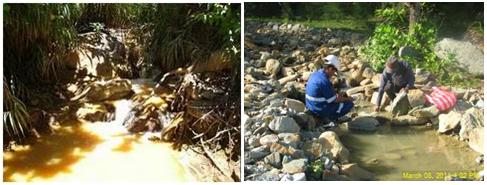
Perching not bathing: The people in the creeks are not actually in contact with the water. They are perching on rocks instead, obviously avoiding the effluent.


02

02
Hidden feet and rubber boots: The feet of the men in blue overalls are almost all hidden from the camera but obviously not immersed in water. Still, two photos show that they are wearing what appears to be rubber boots, another evidence of avoidance.

Vegetation avoids water: The photos show that green vegetation is distant from the water while vines that are in contact with it are brown, leafless and (as they appear in the photos) dead.

03

03

04

04

05

05

06

06

07

07

08

08

09

09
Standing not bathing: The people shown to be at the mouth of one creek are also not bathing but standing. Since they were photographed at a great distance, MGB V fails to prove that they are not wearing rubber boots.

10

10
What creek picnic? A group of men seated around some food are not bathing. They do not appear to be anywhere near the creeks. Instead they are in a parking lot as indicated by the pickup truck in the background.

11

11
Bathing not in creeks: The people shown to be bathing are not doing so in the creeks but far out in the sea whose location is not verified. We cannot tell how long they stayed in the seawater.
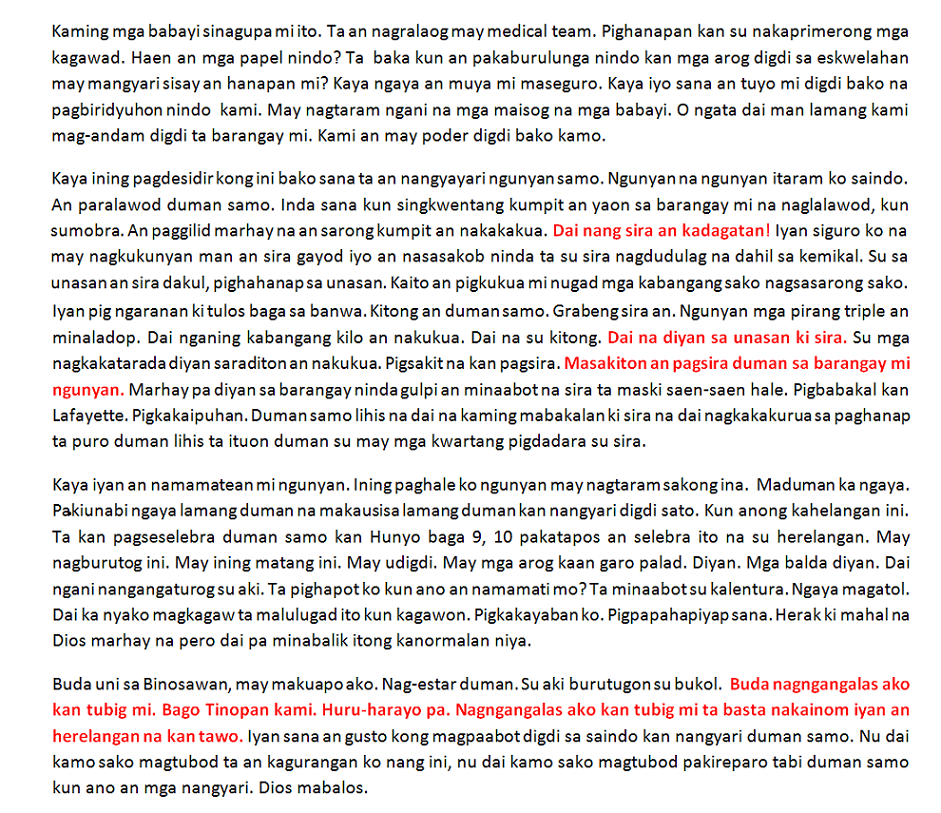
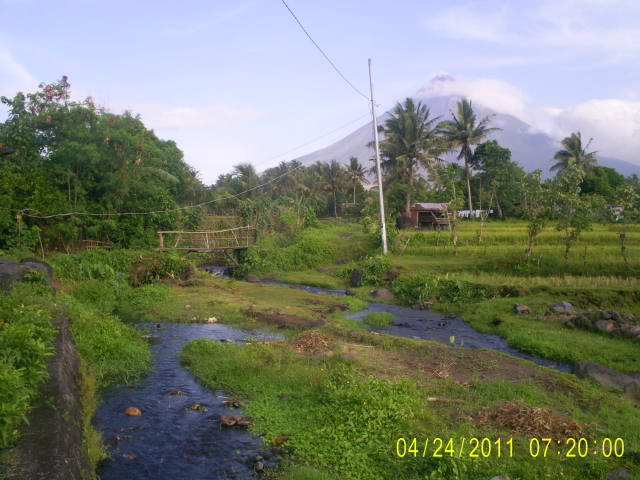
In contrast to those of MGB V, the following photographs of a clean creek at the foot of Mayon Volcano show very close affinity of the vegetation to the water and even the rocks.

In healthy creeks like those in Mayon Volcano: the leaves mingle with the water and the creek beds are green with moss.


While this Mayon creek is almost crystal clear, yellowish coloration is evident in the creeks emanating from the mine site in Rapu-Rapu photographed by MGB V. The MMT report is silent about results of sampling for heavy metals and freshwater organisms. Allowing us free access and surprise visits would have revealed if there are even snails in the creeks. The armed guards under the Special CAFGU Active Auxiliary (SCAA) base are very strong evidence that something is being hidden in the Rapu-Rapu creeks.

Then and Now: What Difference? What Improvement in the Creeks?

According to RRPP, the coloration of the creeks has improved. However, during the Technical Conference with the Environment Management Bureau Region V and Save Rapu-Rapu Alliance on April 26, Engr. Rogelio Corpus, President of RRMI, said that the difference between the pictures then and now is not significant. He requested the Presiding Officer, Engr. Henry Lopez of EMB V, for permission to present RRPP pictures taken on April 25. The RRPP pictures, however, cannot be verified independently because the mining companies do not want "free access and surprise visits" to the creeks. They do not want to withdraw the armed guards "to protect their interests." As an environmentalist organization, SARA wants to protect the environment. It follows that the interests of RRPP are contrary to those of the environment.


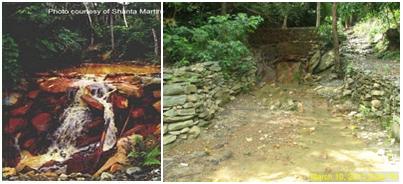
Below, we are presenting ALL pictures in the Annex to the EMB V Investigation Report dated March 8-10, 2011. Those on the left are the pictures we have been showing to authorities which were taken from 2006 to 2009; those on the right are alleged to have been taken in the same spots on March 8 to 10, 2011 by EMB V and the mining companies. You be the judge if there is any improvement.


Pagcolbon gabion

Pagcolbon downstream gabion

Pagcolbon downstream

Pagcolbon downstream looking towards the sea

Pagcolbon shoreline

Pagcolbon downstream

Pagcolbon shoreline

Hollowstone downstream

Hollowstone shoreline


Maypajo shoreline
So, is there any significant difference then and now?


Sunday, August 10, 2008

House militant bloc supports Nueva Vizcaya LGU’s fight vs foreign miners

Charlie V. Manalo and Pat C. Santos

Tribune

Nation

06/14/2008


Bayan Muna Rep. Teddy CasiƱo yesterday reiterated his full support to the people of Nueva Vizcaya as he labelled a Court of Appeals (CA) decision preventing its provincial government from implementing an order seeking to stop mining operations in the area as “a temporary setback for environmental protection, local governance and the defence of national patrimony.”


The CA issued a 60-day injunction with temporary restraining order against the Nueva Vizcaya provincial government which issued a cease and desist order (CDO) against Australia-based mining firm OceanaGold Mining Inc.


“The militant party-list bloc in Congress supports the people of Nueva Vizcaya and its governor, Luisa Cuaresma in this fight. Gov. Cuaresma only put out a CDO to stop OceanaGold from operating the mine after it failed to pay P30 million for a quarrying permit, aside from the growing tension among indigenous tribes — including the murder of the village chief — that the entry of the mining firm has caused. The CA decision has obviously favoured the Australian firm over the local people of the province,” CasiƱo said.


The lawmaker visibly dismayed by the decision penned by CA Associate Justice Remedios Salazar-Fernando, which he said completely favoured OceanaGold. The company runs the Didipio Gold-Copper Mining Project in Barangay Didipio in Kasibu town.


“I cannot help but surmise that the decision is part of the Arroyo administration’s effort to allow OceanaGold to go on with its mining operations that will permanently damage the area. The OceanaGold incursion into Nueva Vizcaya at this point is the cause of brewing tension and violence among Ifugao and Bugkalot tribal communities in Didipio. The company has in fact supplanted the government in the area as it has arrogated the functions of providing social services and peace and order in the area. It has demolished houses and bulldozed rice lands. With all due respect to the Court, we went to the area last June 7, were waylaid by a police checkpoint and in fact saw the deep division among the once peaceful local community due to the entry of OceanaGold. This, to my mind, is what the Court should do to come up with a better decision,” CasiƱo said.


CasiƱo, along with Ifugao Rep. Solomon Chungalao, Nueva Vizcaya Rep. Carlos Padilla, and Gabriela Rep. Luz Ilagan went to the area for an on-site inquiry into alleged OceanaGold’s violations in conducting its operations.


From June 7 to 8, the House Committee on National Cultural Communities held two on-site hearings in Barangays Kakidugen and Didipio, mining sites of foreign owned mining companies RoyalCo and Oceanagold, respectively.


The investigation also focused on OceanaGold’s alleged violations of human rights, the Free and Prior Informed Consent process, certain provisions of the Mining Law and the Local Government Code in relation to its operations.


“It should also be noted that even before the CA decision, DENR (Department of Environment and Natural Resources) Secretary Lito Atienza already branded the Nueva Vizcaya provincial government’s cease and desist order illegal. This emboldened OceanaGold to go to the CA and defy the local authorities. The municipal and provincial governments do not support the project yet Atienza is siding with the mining firm. We will not back down from this temporary setback. The militant bloc in Congress sides with the people and supports the stand of the local governments versus destructive mining operations in Nueva Vizcaya,” CasiƱo said.


The House militant bloc is composed of Bayan Muna Reps. CasiƱo and Satur Ocampo, Gabriela Reps. Ilagan and Liza Maza, and Anakpawis Rep. Rafael Mariano.


Meanwhile, a Roman Catholic bishop demanded the total closure of a hotly contested South Korean-controlled copper and zinc mine in Rapu-Rapu Island , Albay.


Sorsogon Bishop Arturo Bastes claimed the people would definitely be “too happy” if Korea Resources Inc. (Kores) and LG International Corp. will leave the area.


The South Korean state-run mining companies took full control of the project in April after its previous operator, Lafayette of Australia, pulled out over environmental issues.


Bastes said Lafayette got “bankrupt” after its investors backed off due to public clamor against environmental destruction.


“They (Lafayette) have no more investors. They can’t even pay their personnel anymore. It’s no longer financially viable,” he said.


The bishop said Rapu-Rapu mining is supposed to be the government’s “flagship” project in its revitalized mining industry program but it turned out to be a “fiasco.”


Bastes added Lafayette still has a balance of over P130 million in taxes.


The Rapu-Rapu mine was expected to generate revenues of up to $350 million a year from annual production of 11,000 tons of copper and 13,000 tons of zinc.


Kores and LG Group acquired Lafayette ‘s majority stake shortly after the mine was fined for spills that contaminated surrounding waters in 2005.


At least 40 fisherfolk and residents of Rapu-Rapu picketed the South Korean Embassy in Makati City to stop the South Korean investors from taking over the mining operations.


The Bicolanos, together with environmental activists and peasants, urged Ambassador Hong Jong-ki to provoke the pullout of the investments of Kores and LG International in the mining operation.


Rapu-Rapu residents want Lafayette operation stopped

GMANews.TV
06/15/2008 | 10:26 PM


MANILA, Philippines - An organization of Rapu-Rapu Island residents has demanded the pullout of South Korean investors from the controversial Lafayette Phils. mining site, saying they want no mining operations on the island, which is part of Albay.

LG International and Korean Resources Corp. (Kores) gained majority control of Lafayette last April 2008 and took over the operations of the company.

Residents slammed Lafayette's Rapu-Rapu polymetallic mining project, saying it is "bankrupt, controversial and environmentally-damaging."

"There is no reason to continue the Lafayette mining project. Its three-year operation in Rapu-Rapu Island has brought so much environmental destruction, community displacements, human rights violations and livelihood loss to the local people," said Mr. Antonio Casitas, spokesman of the Sagip Isla Sagip Kapwa, a local organization that opposes any mining project in the remote island.

Lafayette was found liable by the Philippine government in November 2005 of contaminating the waters in Rapu-Rapu with cyanide and was fined P10 million. Apart from this, two mine spills, a landslide and several fish kills happened during the operation of Lafayette from June 2005 to October 2007.

The project on Rapu-Rapu Island carries debts of more than $270 million and A$65.6 million due to operational difficulties and inter-company loans. It was met with continuous and strong protest actions at the local, national and international levels.

Casitas reiterated that the Rapu-Rapu mine should be closed for good instead of being sold off to other investors.

"We have said before that large-scale mining is not technically, economically and socially feasible in the small-island ecosystem of Rapu-Rapu. The Korean companies are not welcome on the island and they will suffer the same fate of Lafayette," said Arieto Radores, spokesman of UMALPASKA-Bikol, an anti-mining alliance in the region,.

"Until now the project has no social license to operate. Bicolanos continue to oppose the project and the provincial government officials do not want it," explained Mr. Radores.

"We are now just trying to recuperate from the division and damage Lafayette brought to our people. The urgent action is the rehabilitation of the island and the compensation of mining-affected people not another mining operation. We will hold Environment Secretary Lito Atienza and President Arroyo accountable for their decision to allow the continuation of large-scale mining in our island," Casitas said.

The Mines and Geosciences Bureau (MGB) had previously ordered Lafayette to pay P134 million to ensure that the environment around the mine site is restored and rehabilitated in case the project is abandoned. There is no confirmation if the company had complied.

"The Arroyo [administration] has not learned its lesson from its bankrupt flagship mining project. As the mining project in Rapu-Rapu continues to be anti-people, anti-environment and serves only the interest of foreigners and corrupt government officials, it will fail and be kicked out of the island," Radores said.


Bishop seeks total closure of Korean-controlled mine in Albay

GMANews.TV
06/12/2008 | 05:23 PM


MANILA, Philippines - A senior Catholic bishop demanded Thursday the total closure of a hotly contested Korean-controlled copper and zinc mine on Rapu-Rapu Island in Albay province in Bicol.

Sorsogon Bishop Arturo Bastes claimed the people would definitely be "too happy" if the Korea Resources Inc (Kores) and LG International Corp will leave the area.

"The government should impose total closure of the mining there. It has ruined not only the environment but also our economy," Bastes said in a statement on the Catholic Bishops Conference of the Philippines website.

Bastes noted Korean state-run mining companies took over control of the project in April after its previous operator, Lafayette of Australia, pulled out over environmental issues.

He said Lafayette got "bankrupt" after its investors backed off due to public clamor against environmental destruction.

"They (Lafayette) have no more investors. They can't even pay their personnel anymore. It's no longer financially viable," he said.

He said Rapu-Rapu mining is supposed to be the government's "flagship" project in its revitalized mining industry program but it turned out to be a "fiasco."

Bastes also said Lafayette still has over P130 million pesos balance of taxes payable to the government.

The Rapu-Rapu mine was forecast to generate revenues of $350 million a year from annual production of 11,000 tons of copper and 13,000 tons of zinc.

Korea's Kores and LG Group acquired Lafayette's majority stake shortly after the mine was fined for spills which contaminated surrounding waters in 2005.

Earlier, some 40 fisher folks and residents of Rapu-Rapu picketed the South Korean Embassy in Makati City to stop Korean investors from taking over the mining operation.

Joining them were environmental activists and peasants, who urged Ambassador Hong Jong-ki to provoke the pullout of the investments of Kores and LG International in the mining operation.

"There is no reason to continue the Lafayette mining project. It's three-year operation in Rapu-rapu island has brought so much environmental destruction, community displacements, human rights violations and livelihood loss," environmental group Kalikasan claimed in a statement.


Activists picket embassy to protest mine investor

By Jonathan L. Mayuga
Correspondent
Business Mirror
June 12, 2008


ENVIRONMENTAL activists on Thursday picketed the South Korean Embassy in Makati City and demanded the pullout of Korean investments in the administration’s flagship mining project in Rapu Rapu Island , Albay.

The protest action, according to Kalikasan-People’s Network for the Environment (Kalikasan-PNE) should send a strong signal to the Korean government of how their business will be in the Philippines as far as mining is concerned.

Last April 2008, Philco Resources Ltd.—which is jointly owned by LG Metals and Kores Inc.—gained majority control of Lafayette Philippines Inc. (LPI). Lafayette is previously an Australian-owned company, which operates the Rapu Rapu Polymetallic Mining Project.

Bayani Agabin, former spokesperson of LPI, confirmed that the Korean government through Kores, its investment arm, is taking over the operation and is optimistic of generating income in its first year of operation.

Agabin said the company is, in fact, infusing $30 million to boost Lafayette ’s operation in Rapu Rapu Island , confident that with the new systems in place, it is ready to resume commercial operation.

He said the additional investment will ensure the safety of operations to prevent a repeat of the accidental chemical spill in 2005, which prompted the Department of Environment and Natural Resources (DENR) to investigate and suspend its operation.

The Filipino management team, which used to run the Australian interest resigned from the company last week after negotiations with the new owners fell through.

“There is no reason to continue the Lafayette mining project. Its three-year operation in Rapu Rapu Island has brought so much environmental destruction, community displacements, human-rights violations and livelihood loss to the local people,” Clemente Bautista, national coordinator of Kalikasan-PNE said.

Lafayette was found liable by the Philippine government in November 2005 of contaminating the waters in Rapu Rapu with cyanide and was fined P10 million for damages, as a result of two accidental mine spills, a landslide and a reported fishkill, which happened during the operation of Lafayette from June 2005 to October 2007.

This resulted in Lafayette Mining Ltd., the Australian listed-parent company, being placed under voluntary administration. The local companies filed a petition for rehabilitation with the Pasig courts in February.

Bautista reiterated that the Rapu Rapu mine should be closed for good instead of being sold to another mining investor.

“We have reiterated before that large-scale mining is not technically, economically and socially feasible in the small-island ecosystem of Rapu Rapu. The Korean companies are not welcome in the island and they will suffer the same fate of Lafayette ,” Arieto Radores, spokesman of Umalpaska-Bikol, an antimining-plunder alliance in the region stressed.

Mines and Geosciences Bureau previously ordered Lafayette to pay P134 million to ensure that the environment around the mine site is restored and rehabilitated in the event that the project is abandoned. “The Arroyo government has not learned its lesson from its bankrupt flagship- mining project. As the mining project in Rapu Rapu continues to be anti-people, anti-environment and serves only the interest of foreigners and corrupt government officials, it will fail and be kicked out of the island,” Bautista said.

LPI was the first foreign firm to operate a mine in the Philippines after a law granting full foreign ownership of local-mining projects was upheld by the courts in late 2004.

Its Rapu Rapu mine was forecast to generate revenues of $350 million a year from annual production of 10,000 tons of copper in concentrate, 14,000 tons of zinc in concentrate, 50,000 ounces of gold and 600,000 ounces of silver.

The mine facility, which resumed operations in February last year after its suspension, is operating at just over half of its daily processing capacity of 3,000 tons of ore.

Sorsogon bishop calls for ‘total closure’ of Rapu-Rapu mine

First posted 14:48:24 (Mla time) June 13, 2008
Kristine L. Alave
Philippine Daily Inquirer


MANILA, Philippines – The Catholic bishop of Sorsogon province in the Bicol region has called for the “total closure” of a controversial mine in Rapu-Rapu Island , Albay.

Sorsogon Bishop Arturo Bastes hit Korea Resources Inc. and LG International Corp., which took over the copper and zinc mine previously operated by Australia-based Lafayette Mining Ltd., saying the mine has caused so much environmental destruction in the area.

According to Bastes, the residents near the mine would be only “too happy” if the Korean investors pull out.

“The government should impose total closure of the mining there. It has ruined not only the environment but also our economy,” Bastes said on the Catholic Bishops’ Conference of the Philippines website.

In 2005 and 2006, the mine was temporarily closed by the government after a series of mine tailings spills that contaminated the surrounding waters.

Saturday, August 9, 2008

Environmental advocates picket South Korean Embassy over Rapu-Rapu mines

Manila Times

National

Thursday, June 12, 2008


First posted: AFP, June 10, 2008


ENVIRONMENTALISTS picketed the South Korean embassy in Manila on Wednesday to demand the closure of a controversial Korean-controlled mine in the eastern Philippines , witnesses said.


The protesters urged LG International and Seoul ’s investment arm, the Korean Resources Corp. (Kores) to pull out of the project.


The South Koreans took over control of the project in April after its previous operator, Lafayette of Australia, pulled out over environmental issues.


“There is no reason to continue the Lafayette mining project. It’s three-year operation in Rapu-Rapu island has brought so much environmental destruction, community displacements, human rights violations and livelihood loss,” the environmental group Kalikasan claimed in a statement.


The LG Group and Kores acquired Lafayette ’s majority stake shortly after the mine was fined for spills that contaminated surrounding waters in 2005.


The Rapu-Rapu project was the first foreign-operated Philippine project to reach the production stage after the Supreme Court upheld the legality of a 1995 mining law that opened the sector to foreign investment.


President Gloria Arroyo has called for more foreign capital into the sector, which she says has huge potential to reduce poverty in hinterland areas where most of the Philippines ’ mineral wealth is located.


--AFP


Bishop calls for total closure of mining firm in Rapu-Rapu

Anthony Vargas

Manila Times

National

Saturday, June 14, 2008


A SENIOR Catholic Church official on Friday urged the government for the “total closure” of a controversial copper and zinc mine on Rapu-Rapu Island in Albay due to environmental issues.


The said copper and zinc mine that was temporarily shut down in the past is now being operated by two Korean state-run firms Korean Resources Inc., (Kores) and LG International Corp.


The two Korean firms took over the control of the mining from its previous operator, Lafayette of Australia who pulled out over environmental issues and investors backed out.


Sorsogon Bishop Arturo Bastes said that local residents in the area would only be too happy if the two Korean firms that now operate the mining activities would leave the area.


“The government should impose total closure of the mining there. It has ruined not only the environment but also our economy,” Bastes said in a report that came out at CBCP website.


The Sorsogon bishop said its previous operator, Lafayette went ‘bankrupt’ after its investors, due to public clamour against environmental destruction in the area decided to back out.


“They [Lafayette] have no more investors. They can’t even pay their personnel anymore. It’s no longer financially viable,” Bastes said adding the Australian firm still owes the government P130 million in taxes.


The mining on Rapu-Rapu Island , the bishop said was supposed to be the government’s ‘flagship’ in revitalizing the mining industry in the country, but it turned out to be a big mess.


The zinc and copper mine on Rapu-Rapu Island was forecasted to generate revenues of $350 million a year from annual production of 11,000 tones of copper and 13,000 tones of zinc.


The Kores and LG Group acquired Lafayette ’s majority stake shortly after government issued the mining firm a fine for the spills that contaminated surrounding waters sometime in 2005.


Fisher folks and residents of Rapu-Rapu picketed the South Korean Embassy in Makati City to discourage Korean investors from taking over the mining operation.


The picketers during their rally have urged Ambassador Hong Jong-ki to urge the pullout of the investment of Kores and LG International in the mining operation.


Thursday, August 7, 2008

Fortun Narvasa Salazar

From http://www.fnslaw.com.ph/Mining.html


In a span of barely a decade of providing legal service to the public, FNS has evolved to become one of the more distinguished and prominent law firms in the Philippines , hurdling legal battles of historical importance with its innovative and ingenious approach to client-problems.

Housed at the 23rd Floor of Multinational Bancorporation Centre at the heart of the Makati Business District, FNS opened its first branch office in Cavite , Philippines in 1999 and a liaison and referral office in Hong Kong known as the Fortun Narvasa & Salazar (H.K.) Services Limited in 2002. Its Baguio City branch office was likewise opened in August 2003 to better serve its clients in Northern Luzon .

With its diversified practice ranging from the prosecution of individual and corporate civil and criminal actions to assisting clients in commercial transactions to providing valued advice in the fast-growing global field of electronic commerce and telecommunications, the Firm provides individualized and cost-effective legal service without compromising the exacting demands of professional excellence and quality.

Fortun Narvasa & Salazar Makati City, Philippines


Fortun Narvasa & Salazar was formed in 1993 and provides general legal services and representation to foreign and Filipino mining companies in all aspects of mining, from exploration and project financing to construction, development, and processing. Recognized in the Philippines as a leading firm in mining law, the firm assists clients with joint venture agreements, royalty agreements, government permit approvals, due diligence, mining litigation and dispute resolution, environmental matters, construction contracts, indigenous peoples’ issues, and project financing agreements.


Mining Law Practice


Fortun Narvasa & Salazar (FNS) formed in 1993 provides general legal services to Filipino and foreign companies, including mining entities. It is recognized in the Philippines , a nation rich in mineral resources as a leading firm in mining aw l practice. FNS acts as counsel to the developer of the first foreign funded mining project in the country since the enactment of the Philippine Mining Act of 1995, from its exploration, project financing to its current development and operating stages. FNS, acting as counsel for the Financial and Technical Assistance Agreement (FTAA) Holder, was also instrumental in the recent Philippine Supreme Court decision upholding the right of foreign mining companies to wholly own large-scale mining projects in the country through FTAA's


The Firm represents foreign and Filipino mining companies involved in all aspects of mining from exploration, project financing, construction, development and processing. It assists in joint venture agreements, royalty agreements, government permit approvals, due diligence, mining litigation and alternative dispute resolution, environmental matters, construction contracts, indigenous peoples' issues, and project financing agreements.


Mining Clients:


ANVILMINING LTD. ( Australia )

CHAMBER OF MINES OF THE PHILIPPINES

CLIMAX MINING LIMITED ( Australia )

COPPER MINES AND MINERALS LTD. ( Australia )

EAST-WEST DRILLING PHILIPPINES, INC. ( Philippines )

EGERTON GOLD NL( Australia )

INDOPHILRESOURCES NL( Australia )

Sagittarius Mines, Inc. ( Philippines )

LAFAYETTE MINING LIMITED ( Australia )

Lafayette Philippines, Inc.

Rapu-Rapu Minerals, Inc. ( Philippines )

Rapu-Rapu Processing, Inc.

MINDORO RESOURCES LIMITED ( Canada )

MRLGold Philippines, Inc.

MINCO RESOURCES ( UK )

Semco Mining And Exploration Corporation ( Philippines )

MONTAGUE RESOURCES PTY LTD.

NORMANDY MINING LIMITED/NEWMONT PHILIPPINES, INC, ( Australia )

ORICAPHILIPPINES, INC. ( Australia )

PHILIPPINE GOLD PLC ( UK )

Base Metals and Mineral Resources Corporation ( Philippines )

Banahaw Mining Corporation ( Philippines )

PHILSAGAMINING CORPORATION ( Philippines )

PROCESS MINERALS INTL. PTY. LTD ( Australia )

SUR-AMERICAN GOLD CORPORATION ( Canada )

Philco Mining Corporation (Phillippines)

Batoto Resources Corporation (Phillippines)

TIGER RESOURCES CORPORATION ( Canada )

TEMPLAR RESOURCES NL( Australia )

UNITED PHILIPPINES DRILLING, INC. ( Philippines )


Fortun Narvasa & Salazar

23F Multinational Bancorporation Centre

6805 Ayala Avenue,

Makati City 1226

Philippines www.fnslaw.com.ph


MAIN OFFICE

23rd Floor, Multinational Bancorporation Centre,

6805 Ayala Avenue, Makati City 1227 Philippines

Mailing Address : MCPO Box 2697 Makati City 1200 Philippines

E-mail Address : fnslaw@info.com.ph

Telephone No.: (632) 812-8670 (connecting all departments)

Telefacsimile : (632) 812-7199, (632) 812-4251


Stockholders of F & N


Philip Sigfrid A. Fortun Born in 1958; admitted to the Philippine Bar in 1984; A.B.; LL.B. (University of the Philippines ); Registered Trademark and Patent Attorney; Member: International Bar Association; Inter-Pacific Bar Association; Maritime Law Association of the Philippines .

E-mail address : psafortun@fnslaw.com.ph


Practice Areas : Criminal and Civil Litigation; Family Law; Commercial Arbitration and Alternative Dispute Resolution; Intellectual Property Litigation; Agrarian Law; Admiralty and Maritime Law.


Gregorio Y. Narvasa II Born in 1960; admitted to the Philippine Bar in 1986; B.S. (Ateneo de Manila University); LL.B. (University of the Philippines ); Member: Philippine Bar Association.

E-mail address : gynarvasa@fnslaw.com.ph


Practice Areas : Criminal, Civil and Commercial Litigation; Corporate Law; Family Law; Intellectual Property Law.


Roderick R.C. Salazar III Born in 1962; admitted to the Philippine Bar in 1988; A.B.; LL.B. (University of the Philippines); Member: The Law Association for Asia and the Pacific; International Bar Association; Inter-Pacific Bar Association; Philippine Bar Association; Intellectual Property Law Association of the Philippines; Australian-New Zealand Chamber of Commerce (Phils.); Canadian Chamber of Commerce; Chamber of Mines; Accredited Mediator: Center for Dispute Resolution and Conflict Resolution Group, Inc.; Management Association of the Philippines. E-mail address : rrcsalazar@fnslaw.com.ph


Practice Areas : Corporate and Commercial Law; Civil and Commercial Litigation; Commercial Arbitration and Alternative Dispute Resolution; Maritime Law; Mining; Telecommunications; Immigration; Securities.


Mylene T. Marcia-Creencia Born in 1967; admitted to the Philippine Bar in 1993. A.B. cum laude ( University of Santo Tomas ); LL.B. (San Beda College); Member: Inter-Pacific Bar Association.

E-mail address : mtmcreencia@fnslaw.com.ph


Practice Areas : Labor and Employment; Litigation; Maritime Law; Family Law; Property and Real Estate; Intellectual Property; Industrial Property; Corporate Law.


Labuan Offshore Financial Services Authority (LOFSA)

From http://www.lofsa.gov.my/


LOFSA, a one-stop agency was established in 1996 to:

  • Focus on business development and promotion
  • Process application and supervise offshore activities
  • Develop national objectives, policies and set priorities
  • Administer and enforce legislation
  • Incorporate/register offshore companies

Labuan is an island strategically located in the Asia-Pacific region, off the coast of East Malaysia . It is administered by the Federal Government of Malaysia, easily accessible, has a developed infrastructure, satellite telecommunication, political stability, low cost of operation and shares the same time zone with other major Asian cities. Labuan also attributes its success to the Malaysian government's commitment to develop Labuan to its fullest potential.


Labuan is an integrated International Business & Financial Centre (IBFC), offering a wide range of offshore financial products and services to customers worldwide, including banking and investment banking, insurance, captives, trust business, fund management, investment holding, company management and Islamic financing.


LOFSA has implemented policies that facilitate the creation of a competitive and attractive business environment in Labuan . Labuan's legislative framework is not only business-friendly but also prudent to safeguard Labuan 's international image as a clean and reputable offshore financial centre.


Labuan Office

Mail

Labuan Offshore Financial Services Authority (LOFSA),

Level 17, Main Office Tower ,

Financial Park Complex,

Jalan Merdeka,

87000 Labuan F.T., Malaysia .

Phone and Fax

Tel No: 6 087 591200 / 591300

Fax No: 6 087 413328 / 453442 / 411496


KL Facilities Office

Mail

Suite 2A-06-01, Level 6 Block 2A,

Plaza Sentral,

KL Sentral,

50470 Kuala Lumpur F.T., Malaysia.

Phone and Fax

Tel No: 6 03 2273 8200

Fax No: 6 03 2274 8200

Email

communication@lofsa.gov.my


LG International Corp

From http://www.lgicorp.com/


In 1953, LGI started off as Lucky Industry, and has since been involved in exporting and importing activities for Korea ’s major industries, leading the way for the country’s significant economic development. LGI is proud of its status as a total trading company, acquiring and supplying resources essential for industrial growth and enhanced life quality, as well as a wide range of raw materials. I am deeply thankful for the unwavering support of our customers and stakeholders, which they have provided to LGI for over 50 years.


In the 21st Century competition is growing more intense than ever before to secure and supply resources. LGI espouses the mid- and long-term vision of becoming a trading specialist in resources and industrial raw materials, endeavouring to maximize its business capabilities, and committed to being reborn as a highly competitive global business partner. We pledge to make a definitive investment in developing overseas resources and reliably acquiring and supplying energy and raw materials domestically unavailable to Korean industries. Also, backed by our accumulated business experience and powerful operational networks, we will continuously push to explore new markets and invest in the development of new businesses and eco-friendly businesses, creating future revenue sources and honouring our corporate social responsibilities.


Overview


LG International Corp. operates its business through three divisions. The energy and metal division provides petroleum, natural gas, crude oil, coals, steels and others. The plant and petrochemical division is engaged in the provision of petrochemical products such as synthetic resins, basic emulsion and other chemicals, and construction of industrial and power plants. The import and distribution division imports and sells helicopters, commercial cars and information technology (IT) products such as digital cameras, mobile related components, displays and others. During the year ended December 31, 2007, energy and metal division and plant and petrochemical division accounted for approximately 60% and 37% of total sales. The Company has five subsidiaries and 42 branch offices in the overseas markets including China , Japan and Oceania , among others.


Quick Financial Synopsis


BRIEF: For the fiscal year ended 31 December 2007, LG International Corp.'s total revenues decreased 6% to W8.814T. Net income decreased 53% to W47.90B. Revenues reflect exclusion of fashion business segment. Net income also suffered from decreased gross profit margin, decreased gain on derivatives trade, increased loss on disposal of trade receivables, inclusion of bad debt expense and decreased gain under equity method.


LG International Corp. IR Team, LG International Corp., LG Twin Tower ,

Yoido-dong 20, Youngdungpo-gu, Seoul 150-721, Korea .

E-mail : ir@www.lgicorp.com

FAX : 82-2-3773-5836


LG International Corp - Philippines

General & Wholesale Trading

Private Limited Company

Unit 1012 Tower 1 and Exchange Plaza

Ayala Triangle

Ayala Ave

Makati City


Korea Resources Corporation (KORES)

Form http://eng.kores.or.kr/


KORES was incorporated in year 1967 and it has ever since contributed to the national economic development by supplying stable energy and industrial mineral resources. Our company is especially focusing on securing supply on bituminous coal, uranium, iron, copper, steel, nickel which our government has selected as the 6 strategic minerals. Due to a sudden increase in price and demand of the several mineral resources, our business is very competitive at this present. While we depend on foreign countries for 97% of the energy and mineral resources Korea uses, independent resource developments are one of our key tasks for our nation’s economic development.

Uranium and bituminous coal that takes 77% of domestic energy production as well as steel, aluminum, iron, copper, and graphite are our necessary resources because they are raw materials that are essential in our daily lives such as in producing highly technology demanding materials like car, TV, and mobile phone. Unfortunately, we depend on the foreign countries for its supply. This is the main reason why we are devoting ourselves to turn Korea into a resource-rich country.

KORES has made the next goal to get into the global top 20 mining company through relentless challenges and innovations. Thank you for your continuous support and interest in us.

Head Office
79 Siheung-daero,
Dongjak-gu,
Seoul,
156-706,
KOREA

Tel. 82-2-840-5600
e-mail: koreshome@kores.or.kr

Malaysia Smelting Corporation Berhad (MSC) - Corporate Profile

From http://www.msmelt.com/


With roots dating back to 1887 as the smelting operations arm of The Straits Trading Company Limited (STC), Malaysia Smelting Corporation Berhad (MSC) of today enjoys an unsurpassed global reputation as the world’s leading custom smelter and is renowned as one of the world’s largest integrated producers of tin metal.


Not one to rest on its laurels, the Group has embarked on a vigorous diversification strategy in 2007 which is intended for the Company to transform itself once again - this time from a single commodity business focused on tin to a well established resources organisation in the metals and mineral resources sector based in the Asia-Pacific region with a global outlook and worldwide network of capabilities.


With the Group’s core expertise and solid foundation of over a century of smelting excellence to its credit, the Group’s smelting facility in Butterworth operates one of the most cost efficient smelting plants in the world converting primary, secondary and often complex tin bearing ores into high purity tin metal for industrial application. The plant has a production capacity of approximately 35,000 tonnes of refined tin a year. MSC Straits refined tin brand which is registered at London Metal Exchange (LME) and Kuala Lumpur Tin Market (KLTM) is accepted worldwide and has purity ranging from the standard Grade A (99.85% Sn) to the premium grade electrolytic tin (99.99% Sn).


The Group’s Indonesian operations are primarily undertaken through its three subsidiaries - 75% owned PT Koba Tin, wholly owned PT MSC Indonesia and 60% owned PT Tenaga Anugerah. PT Koba Tin operates two dredges and gravel-pump mining units in rich alluvial grounds within an area of 41,680 hectares under a contract of work agreement with the Government of Republic of Indonesia. PT Koba Tin has its own smelter with a production capacity of 25,000 tonnes of refined tin a year and produces the premium grade Koba brand (99.9% Sn) which is also widely consumed as a premier brand with superior quality.


PT MSC Indonesia is the Group’s vehicle undertaking major exploratory programmes to search for new on-shore tin deposits in Indonesia under production sharing agreements with local Indonesian counterparts. PT MSC Indonesia has entered into various exploration and production sharing agreements covering a total prospective area of approximately 16,000 hectares in Indonesia .


PT Tenaga Anugerah has secured production sharing rights in offshore tin mining areas in Indonesia . Production is expected to commence during the middle of 2008.


The Group has also gained a foothold in the Australian tin mining industry with its 40% equity interest in Australian Oriental Minerals NL (AOM). AOM is currently undertaking exploration and development of prospective and potential tin mining areas in Australia.


In November 2004, MSC acquired Rahman Hydraulic Tin Sdn. Bhd. (RHT), Malaysia ’s long established and largest operating open-pit eluvial tin mine. Extensive exploration works and improvements of milling/concentrator circuit and recovery operations have been undertaken since the takeover, and today RHT is a sustainable and significant tin producer in Malaysia.


In the downstream sector, the Group has a 40% equity interest in Redring Solder (M) Sdn Bhd. Redring Solder’s principal activities are the manufacture and sale of both the tin lead and lead free solder products for jointing and semi-conductor applications in the electrical and electronic industries.


In October 2007, MSC entered into a joint venture agreement with Guangxi Guilin Jinwei Realty Co. Ltd and Vertex Metals incorporation of Taiwan to enable it to own and operate a tin smelting plant in the Guangxi province. The Company’s stake in this joint venture is 40%. The smelting plant is located in Linqui, Guangxi and is expected to have a targeted annual production capacity of 10,000 tonnes of refined tin and tin based products, including tin chemicals and is projected to commence operations in the second quarter of 2008.


OTHER METALS AND MINERALS


Three core metals and minerals - gold, coal and nickel - have been identified to be added to MSC’s portfolio and a three pronged strategy for its diversification plans has been adopted. These are:

  • Strategic investment as a cornerstone investor with board representation
  • Life-of-mine investments with controlling interest and potentials for further expansion through organic growth and acquisitions
  • Portfolio investments in resource equities

Barely six months’ into the adoption of the diversification strategy, the Group managed to make significant stride by its strategic entries into both nickel and gold sectors.


Nickel


In December 2007, MSC acquired a strategic interest in a nickel development project in Vietnam through the subscription of 12.8% shares in the Canadian listed Asian Mineral Resources Limited (AMR) with provision to increase its shareholding further up to 18.96%. AMR’s nickel project offers high grade massive sulphide nickel deposit which is being developed to become low cost nickel producer with a short lead time to production and is expected to commence in early 2009.


Gold


In March 2008, MSC chalked up another historic milestone following its strategic entry into the gold sector with the acquisition of 18.9% interest in Beaconsfield Gold NL, a company listed on the Australian Securities Exchange. Beaconsfield is a mid-tier gold producer operating a high grade underground gold mine in Tasmania , Australia .


MSC will continue to focus its growth strategy on its core business through strategic acquisitions and organic growth where its core expertise, skills and capabilities can add value and make a difference particularly in increasing operating efficiencies, innovating products and services and forging global commercial and marketing networks to ensure its continued leadership position in the tin industry. Whilst the core tin business shall provide stable earnings, the MSC Group shall continue to broaden its earnings base in the global metals and mineral resources sector, working strategically and synergistically with its parent company, The Straits Trading Company Limited.


Principle Place of Business

Address:

27, Jalan Pantai

12000 Butterworth

P.O. Box 2, 12700 Butterworth,

Malaysia

Tel. : 604-333 3500 (general)

Fax : 604-332 6499 (executive)

Email : msc@msmelt.com


Expansion of Lafayette's operation is meeting stiff resistance from various stakeholders

Expansion of Lafayette's operation is meeting stiff resistance from various stakeholders

CIRCA flaunts the Ten Commandments of Climate Change

Commandment Number 7 states: Thou shall not resort to open pit mining . . . to avert climate change. Notice the photo of the CIRCA Executive Director at lower left.

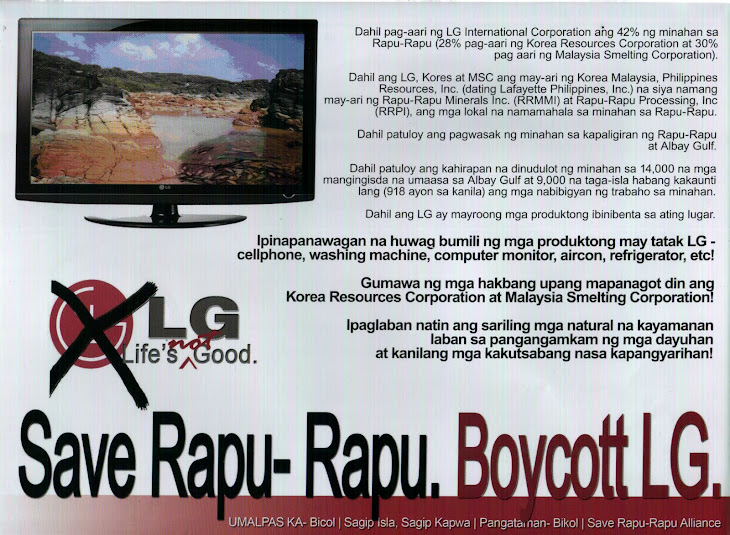
CIRCA Defies SARA Boycott Call

CIRCA Defies SARA Boycott Call

Though blurred, the LG label is still visible on the flat screen.

Evidence that Nong Rangasa suggested to invite mining companies to his LGU Summit + 3i exhibit

Evidence that Nong Rangasa suggested to invite mining companies to his LGU Summit + 3i exhibit
Excerpt from the minutes of the meeting on October 11, 2010